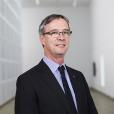
Laboratory Operations Manager, National Deuteration Facility
Role at ANSTO


Showing 121 - 140 of 154 results

ANSTO has agreed to participate in an Australian trial of a review of research infrastructure access proposals in which applicants remain anonymous to aid the removal of structural barriers to the career progression of Women in STEM.
Research has demonstrated that internally generated neutrons could be used to effectively target micro-infiltrates and cancer cells outside of the defined treatment regions.

Professor Lee is a Nuclear Medicine Physician at Austin Health in Melbourne, with extensive nuclear medicine expertise and is very highly regarded in the nuclear medicine community.

Dr Peter Kappen manages the Spectroscopy Group at the Australian Synchrotron.
ANSTO is participating in a major project to learn more about an important component of the atmosphere, the hydroxyl radical.

ANSTO User Meeting 2021 - Speakers

Australia’s Open Pool Australian Lightwater (OPAL) reactor is a state-of-the-art 20 megawatt multi-purpose reactor that uses low enriched uranium (LEU) fuel to achieve a range of activities to benefit human health, enable research to support a more sustainable environment and provide innovative solutions for industry.
The physics and chemistry used at ANSTO is built upon, in significant part, by pioneering female scientists who were sidelined, expelled, or simply not credited appropriately for their achievements.

Radiation can be described as energy or particles from a source that travel through space or other mediums. Light, heat, and wireless communications are all forms of radiation.

ANSTO is coordinating and facilitating the calling of pre-concept papers for the next cycle of technical cooperative project proposals under the Regional Cooperative Agreement for Research, Development and Training Related to Nuclear Science and Technology for Asia and the Pacific (RCA) | IAEA