Principal Research Scientist, Manager - Spent Fuel Program (Nuclear Fuel Cycle)


Showing 121 - 140 of 182 results

A team of scientists led by Monash University and the University of Melbourne in association with the Peter Doherty Institute for Infection and Immunity have made progress in clarifying the molecular interactions that underpin how our adaptive immune cells recognise SARS CoV-2, which causes COVID-19.
Researchers have discovered a 380-million-year-old heart – the oldest ever found – alongside a separate fossilised stomach, intestine and liver in an ancient jawed fish, shedding new light on the evolution of our own bodies.

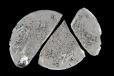
Within the bulk structure of such glasses, boron is known to be a key actor, as it exhibits intriguing and composition-dependent changes in coordination state that often drive properties.

The BRIGHT Nanoprobe beamline provides a unique facility capable of spectroscopic and full-field imaging. NANO will undertake high-resolution elemental mapping and ptychographic coherent diffraction imaging. Elemental mapping and XANES studies (after DCM upgrade) will be possible at sub-100 nm resolution, with structural features able to be studied down to 15 nm using ptychography.
High intensity X-ray beam provides insights into the activity of natural killer cells.

Detailed data on ANSTO electricity use and CO2 emissions for FY2024 - FY2025


We understand that electrochemistry, electrode design and failure modes of your battery system are going to determine your design and research decisions.
ANSTO researchers have demonstrated longstanding expertise in the study of nuclear fuel and radioactive waste with two recent journal articles in a special issue of Frontiers of Chemistry.
Scientists at ANSTO characterise structures with atomic detail using probes such as x-rays, electrons, neutrons and ions.
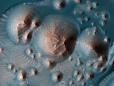
ANSTO provides a range of capabilities using neutrons, X-rays and infrared radiation to study the solids, liquids and gases that might be found in materials in our solar system and beyond.
ANSTO provides a range of capabilities using neutrons, X-rays and infrared radiation to study the solids, liquids and gases that might be found in materials in our solar system and beyond.

ANSTO provides eduroam services for partnering institutions in Australia and around the world.

Researchers from ANSTO and NASA’s Jet Propulsion Laboratory have uncovered the likely mineral composition of Saturn’s largest moon, Titan, revealing a world of exotic organic crystals unlike any found on Earth.

Andrew Peele was appointed Group Executive for ANSTO Nuclear Science and Technology in July 2021 and was Director of the Australian Synchrotron from 2013 -2021. He is an adjunct Professor of Physics at La Trobe University.