Nuclear medicine congress
Congress marks watershed moment for nuclear medicine and ANSTO


Showing 1221 - 1240 of 2438 results
Congress marks watershed moment for nuclear medicine and ANSTO
Innovative medical device Rhenium-SCT® therapy for non-melanoma skin cancer is now available in Australia
Padstow North and Caringbah North selected as winners of ANSTO's Top Coder competition.
The Chair of ANSTO, The Hon Dr Annabelle Bennett, AC SC, announced today that Mr Shaun Jenkinson has been appointed Chief Executive Officer of ANSTO following a global search for the position.
Scientists from UNSW and ANSTO have characterised the structure of two-dimensional transition metal carbides, carbonites, and nitrides (MXenes) materials, that could be used as a lightweight fire-retardant filler and in energy storage devices.
Research has demonstrated that internally generated neutrons could be used to effectively target micro-infiltrates and cancer cells outside of the defined treatment regions.
Neutron scattering has contributed to a 'tour de force' of chemistry led by Monash University.

This COVIDSafe Plan describes the actions that ANSTO will take to keep our staff, contractors and visitors and platform users and collaborators safe and minimise the risk of the spread of COVID-19 infection.
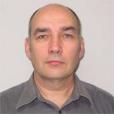
Tony is jointly responsible for the day to day maintenance, running and ongoing development of the STAR and ANTARES accelerators.

Online and interactive while in your home. Kids can zoom into these school holidays workshops and create movies, animations, arcade games, roller coasters and more. Limited spaces: book now.
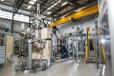
When an energetic ion beam hits a sample it will interact with the atoms through a number of very complex interactions. By detecting and measuring the reaction products resulting from the various interactions and their intensities, you can obtain quantitative data on the sample's constituent elements and their spatial distribution.
ANSTO’s Siobhan Tobin has been awarded the 2019 Rhodes Scholarship for Victoria which is one of the most prestigious scholarship programmes internationally.
An unassuming rock shelter in the Flinders Ranges has been revealed as the oldest known evidence of Aboriginal Australian settlement, thanks in part to advanced nuclear techniques, technology and scientists.
Study revealed that the chemical forms of sulfur change when land is converted from undisturbed soils to cropping soils and forms of sulfur which bind strongly to the soil mineral particles remains far more stable.