

Showing 1321 - 1340 of 2006 results
Revealing the sources of Sydney’s air pollution
ANSTO’s experts build new knowledge, drive innovation and support training and development for the safe management of Australia's radioactive waste
ANSTO has almost seventy years of experience in advancing an understanding of the management of spent nuclear fuel and delivering safe and reliable forms for radioactive waste.
Synchrotron light reveals secrets of mystery McCubbin
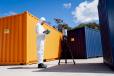
Industries
It is critical across many industries to identify and locate sources of radiation accurately and quickly. One of the more challenging aspects of dealing with radiation is that you cannot see it directly, which can result in potential exposure when working in those environments.
Using nuclear techniques for coastal environments
IAEA Regional Training Course on coastal environments held at ANSTO for representatives from Asian Pacific.

2021 Shorebirds Competition Summary and Results
Shorebirds Competition 2021 results.
A natural radioactive tool for urban pollution studies
Renewed agreement with Japanese research organisations to bolster cooperation in neutron science and technology
ANSTO renewed its Memorandum of Understanding (MOU) with the Japan Proton Accelerator Research Complex (J-PARC) operated by the High Energy Accelerator Research Organisation (KEK) and Japan Atomic Energy Agency (JAEA). Now broadened to include their partner Comprehensive Research Organization for Science and Society (CROSS), the signing took place early in the year and a celebratory workshop was held late July.
Exhibition recognised with prestigious MAGNA 2022 Research award
A Powerhouse exhibition was recognised with a prestigious Museums and Galleries National Award for Research at a ceremony in Perth this morning. The Invisible Revealed exhibition was organised in collaboration with ANSTO and the University of NSW.
Assessing the impacts of plastics in our oceans and seas
Leadership changes at ANSTO
This afternoon, the Chair of ANSTO, Dr Annabelle Bennett, wrote to all staff to let them know that CEO Dr Adi Paterson has decided to resign. She said the Board is deeply appreciative of the contributions Adi has made, including to the health, research and academic outputs of ANSTO during his tenure. Mr Shaun Jenkinson will continue as Acting CEO, while the Board undertakes a global search for a permanent CEO.
Studies in selective microbial deuteration for chiral molecules
Synchrotron images provide insights into patient healing after placement of dental implants
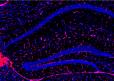
Understanding the biological response to radiation
Research is undertaken to characterise and optimise the beneficial impacts of radiation on living matter
Centre for Accelerator Science
The Centre for Accelerator Science provides complementary capabilities to Synchrotron-based and the neutron-based research with the operation of four accelerators, associated beamlines, clean laboratories and in-house expertise in ion beam analysis (IBA) and accelerator mass spectrometry (AMS).

Radiation Testing - Expertise
The Centre for Acclerator Science operates accelerators that can be used for space radiation testing.
Applications - Koala
Applications, Recent Results and Publications on the Koala instrument.
Safety and security at ANSTO is always second to none

Using elemental data to combat illegal wildlife trade
This resource guides students through how to interpret and analyse authentic research data, generated during a collaborative project between UNSW, UTS, ANSTO and Taronga Zoo Sydney. The project examines the use of high-resolution x-ray fluorescence as a tool to combat the international illegal wildlife trade (IWT) of short beaked echidnas, which are being removed from the wild and claimed as captive-bred.
Students will:
- examine the adaptations of short beaked echidnas that increase their ability to survive in their environment
- explore the use of technology in contributing to the study and conservation of biodiversity
- construct simple graphs of the provided data using MS Excel, and interpret and analyse these graphs
- investigate how scientific knowledge interacts with social, economic, cultural and ethical issues.