Archive
See details of previously published customer updates from our Health products team.


Showing 141 - 160 of 528 results
See details of previously published customer updates from our Health products team.
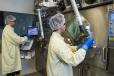
Tool developed for producing F-18 radiopharmaceuticals for PET imaging.

At ANSTO we understand that diverse teams produce better outcomes – and we value the merit that a diverse perspective can bring to the quality and outcomes of our work, and the way we get the job done.
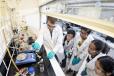
Winners of the Big Ideas Competition 2021
Useful in some mineral processes but a major problem in others, jarosite may be the key to unlocking the geological history and environmental context of water on Mars.

Research on lunar meteorite and moon crater analogues coincides with Science Week.

Over the last decades, neutron, photon, and ion beams have been established as an innovative and attractive investigative approach to characterise cultural-heritage materials.
Minerals Principal Consultant, Dr Karin Soldenhoff, was honoured with the 2024 NSW Women in Mining -Technological Innovation award last week for her work as technical lead on the Australia Strategic Metals (ASM) Dubbo Project, and development of a new solvent extraction technology to separate rare earth and other critical elements.

Blue Carbon Horizons Team showed coastal wetlands capture more carbon as sea levels rise


Challenge your understanding of nuclear science and technology with fun secondary school activities, exciting competitions and unique tours of our facilities.

The 2025 Deaf Youth Science Camp is a chance for Deaf/hard-of-hearing young people (aged 12-17 years old) to participate in an immersive science experience. At the camp, participants will do hands-on science activities, go on tours of different science facilities, and meet Deaf STEM professionals. The camp is also an opportunity to develop personal and leadership skills as well as enhance friendship networks.
Exploring the interaction of polystyrene nanoplastics and blood plasma proteins.