Radiation measurement
ANSTO maintains national capabilities in radionuclide metrology, the measurement and detection of ionising radiation, radioanalytical chemistry and nuclear forensics to support industry, government and scientific users.


Showing 141 - 160 of 502 results
ANSTO maintains national capabilities in radionuclide metrology, the measurement and detection of ionising radiation, radioanalytical chemistry and nuclear forensics to support industry, government and scientific users.
ANSTO is now accepting applications for three Director positions within the Nuclear Science and Technology group: The Director of the Nuclear Materials Research and Technology Group, Director of Environment Research and Technology Group and Director of the Health Research and Technology Group.

ANSTO offers capabilities and expertise for the radiation testing and accreditation of space-based systems.

Federal Parliament’s House Standing Committee on the Environment and Energy has presented its report, arising from its Inquiry into the prerequisites for nuclear energy in Australia today.
Sharing ANSTO education expertise in nuclear with international secondary school teachers in IAEA training.
Invisible deuterated detergents revealed
Following your experiment at ANSTO there are certain tasks that users can complete including a user feedback survey and claiming reimbursement for travel expenses.
Dr Mitra Safavi Naeini continues her commentary of the radiation studies being undertaken in the Artemis II mission.
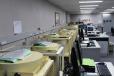
ANSTO’s radioanalytical facilities are recognised internationally and have extensive experience in the measurement of radioactivity from a wide variety of matrices. Our primary radoianalytical techniques include gamma spectrometry and alpha spectrometry.
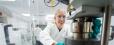
Chemical deuteration involves deuterating whole molecules or building blocks for the synthesis of a desired molecule by exposing them to heavy water (deuterium oxide) at high temperatures and pressures in the presence of a catalyst. If required, compounds can then be synthesised from the deuterated building blocks using organic chemistry techniques.

With more than 50 years of experience in monitoring natural and anthropogenic radionuclides in the environment, ANSTO can provide the crucial data and insights you need to assist with the planning and risk management associated with oil and gas decommissioning.
Frequently asked questions about ANSTO for the community.
The Australian Nuclear Science and Technology Organisation (ANSTO) has joined a team, lead by the US Department of Energy’s Pacific Northwest National Laboratory (PNNL), to install a high resolution monitoring system at ANSTO’s medical isotope production facility in Lucas Heights, Australia.
Irradiation is the process by which an object is exposed to radiation. Irradiation can be useful for many industry applications.
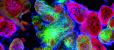
The measurement and manipulation of radiation and radioactive materials within biological systems. Capabilities include access to a range of radioisotopes, gamma/X-ray sources and a selection of X-ray beams, ion beams and neutron beams for irradiation.
ANSTO today welcomed a significant Federal Government funding allocation to further safeguard the production of life-saving nuclear medicines in Australia.
Consortium will map the 86 billion nerve cells, 100 trillion connections and neurotransmitters in the human brain.
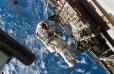
ANSTO has a range of capabilities and expertise to support aerospace and space research.