Funding supports seafood traceability
Grant supports development of handheld technology to verify origin of seafood.


Showing 141 - 160 of 206 results
Grant supports development of handheld technology to verify origin of seafood.
An international research collaboration between the University of New South Wales (UNSW), the Shanghai Institute of Applied Physics (SINAP) and ANSTO has provided insights into the performance of advanced material for use in the high-temperature environment of molten salt systems.
ANSTO health researchers have contributed to an international study published in Nature Neuroscience that sheds light on the mechanism by which anti-anxiety drugs act on the brain which could lead to cognitive impairment in vulnerable individuals.
An Australian-led international research team, including a core group of ANSTO scientists, has found that doping a promising material provides a simple, effective method capable of extracting uranium from seawater.

Role at ANSTO
Two of Australia’s leading science organisations, ANSTO and the National Measurement Institute (NMI), which share areas of common interest in both measurement and research, signed a MOU formalising collaboration on 6 March 2019.

ANSTO has supported research led by a University of Sydney team who gained insights into how oil molecules retain their ‘liquid-like’ properties when they are chemically attached as an extremely thin layer to solid surfaces.
Professor Peter Lay from the University of Sydney has been awarded the Australian Synchrotron Lifetime Contribution Award by ANSTO, the Australian Nuclear Science and Technology Organisation.
ANSTO has collaborated on a study assessing the impact of the commonly-used food additive titanium dioxide (TiO2) on gut microbiota and inflammation.


ANSTO shares expertise on food authenticity research using nuclear techniques with Southeast Asia stakeholders.
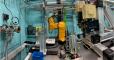
With enhanced submicron spatial resolution, speed and contrast, the Micro-Computed Tomography beamline opens a window on the micron-scale 3D structure of a wide range of samples relevant to many areas of science including life sciences, materials engineering, anthropology, palaeontology and geology. MCT will be able to undertake high-speed and high-throughput studies, as well as provide a range of phase-contrast imaging modalities.
ANSTO researchers have taken up the challenge to develop a coating for the cladding used in nuclear reactors to prevent it from taking up hydrogen and releasing it if temperatures get too high and repair itself if damaged.
Outstanding individuals and teams have been recognised for their outstanding work, innovation, excellence in the 2025 ANSTO Awards.
Dr Ceri Brenner appointed new leader of the Centre for Accelerator Science