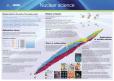
Chart of radionuclides
This poster explores information about radioactive decay, fission vs fusion, applications of nuclear science and displays the chart of radionuclides.


Showing 141 - 160 of 248 results
This poster explores information about radioactive decay, fission vs fusion, applications of nuclear science and displays the chart of radionuclides.

ANSTO provides access to specialised facilities and capabilities by application. Please ensure that you contact the relevant ANSTO scientist for advice before submitting a proposal.
Virtual activities celebrating the benefits of nuclear science and technology held for National Science Week

Creating a safe, inclusive and respectful online community for all.
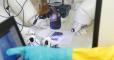
ANSTO provides nuclear forensic analysis and advice in support of law enforcement and training to domestic and international partners
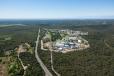
In January 2026, Mr Michael Quigley AM, ANSTO Board Chair, shared ANSTO's Statement of Intent with the Minister for Industry and Innovation, and Minister for Science.
ANSTO participation in ARC on Intelligent Robotic Systems for Real-time Asset Management has potential benefit in the management of infrastructure and assets
Accelerator technique used in pioneering biomaterials research led by the University of Sydney.
Australia’s new state-of-the-art nuclear medicine facility gets green light.
ANSTO scientists have been featured in the new issue of Careers with STEM Science, a publication produced for high school students, undergraduates and grads, careers advisors, teachers and parents to discover careers and study paths.
Following a decade of imaging to support research and clinical trials at ANSTO and the University of Sydney’s Brain and Mind Centre at Camperdown, two PET scanners have been transferred to the University of Wollongong.

ANSTO contributes to new international project to improve how the world assesses the economic viability of Small Modular Reactors
Devices that use quantum sensors take advantage of quantum properties, unlike conventional instruments that apply classical physics in their operation.

Over the last decades, neutron, photon, and ion beams have been established as an innovative and attractive investigative approach to characterise cultural-heritage materials.