Potential true theranostic agent for cancer produced
Scandium 47, a therapeutic radioisotope and potential theranostic, has been produced for the first time at ANSTO. Theranostics are used to both diagnose and treat disease.


Showing 1421 - 1440 of 2438 results
Scandium 47, a therapeutic radioisotope and potential theranostic, has been produced for the first time at ANSTO. Theranostics are used to both diagnose and treat disease.
Charcoal particles from recent bushfires in NSW were carried 50 kilometres by the wind, which has significance for fire history reconstruction.

Molten Salt Reactors (MSRs) are nuclear reactors that use a fluid fuel in the form of very hot fluoride or chloride salt rather than the solid fuel used in most reactors. Since the fuel salt is liquid, it can be both the fuel to produce heat and the coolant to transport the heat to a power plant.
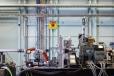
Samples on the X-ray fluorescence microscopy beamline at the Australian Synchrotron.
Australian clean energy technology company, entX Limited is taking advantage of ANSTO’s unique capacity to generate tailored radioisotope products in the OPAL multi-purpose nuclear reactor to advance a series of innovative projects.
Pioneering work on materials for energy production, such as lithium ion batteries, has made ANSTO a centre of specialist capabilities and expertise.

ANSTO scientist Dr Paul Callaghan helped develop new OECD guidance for studying how nanoparticles are absorbed, distributed and cleared by the body.
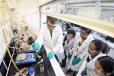
Winners of the Big Ideas Competition 2021
National Science Week is a time to celebrate science and the important role national science agencies like ANSTO play in delivering outcomes that benefit all Australians.

ANSTO recently hosted a public Ask Us Anything event on nuclear medicine, sharing information on how we safely manufacture and distribute nuclear medicine across Australia each week to hundreds of hospitals and clinics.
Event held to mark anniversary of SPRing-8 in Japan.

BlueScope Steel Project Summary
ANSTO's Chief Nuclear Officer shares insights on the safe management of Australia's nuclear waste.
A large international team led by scientists from the Institute for Superconducting and Electronic Materials at the University of Wollongong has verified that the introduction of novel molecular orbital interactions can improve the structural stability of cathode materials for lithium-ion batteries.

This data set gives students the opportunity to investigate one of today's most important environmental challenges: PFAS, often known as the "forever chemicals".
You may not have heard much about PFAS, but they have been widely used in everyday products including cosmetics, sunscreen, waterproof clothing, dental floss and even food packaging. Because these chemicals are highly resistant to breaking down, they can remain in the environment for a very long time.
Using real data produced by ANSTO scientists, teachers can get students to: