
AUM2023 Accommodation Options
Accommodation Information


Showing 1581 - 1600 of 2173 results
Accommodation Information

Our goal is to create an inclusive, respectful symposium environment that invites participation from people of all races, ethnicities, genders, ages, abilities, religions, and sexual orientations.


As a new or returning user, there are certain requirements that must be completed to ensure that your beamtime at the Australian Synchrotron runs smoothly.
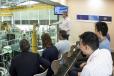
Tours can be booked for groups from Monday to Friday, subject to availability. Groups must be at least 12 people. We can cater to a maximum of 32 people, as this is the number we can accommodate in our on-site buses.
When you request a tour, please give us as much information about the age range and learning levels of your participants so we can best accommodate your group. This tour is not intended for children younger than 8 years old.
Duration: 2.5 hours
Cost: $15 each for all tour attendees (parents and children)
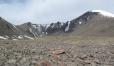
The application of cosomogenic radionuclides in the Earth sciences has provided the essential geochronological timing of continental and polar glacial history over the past few millions years, and revolutionised our understanding of the processes controlling landscape evolution on spatial scales of metres to kilometres.
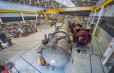
Scientists and researchers within ANSTO's Australian Centre for Neutron Scattering area have been published in a wide range of publications and have presented at many conferences.
Debris is still raining down on Earth more than 100 million years after the giant cosmic explosion that created it.
ANSTO environmental scientists contribute to investigation of carbon capture in wetlands.
Defence Materials Technology Centre honours achievements of two ANSTO collaborators.
ANSTO's reactor utilisation team has received an international award.
The need for a smaller, more transportable version of ANSTO’s 1500-litre atmospheric radon-222 monitor, and with a calibration traceable to the International System of Units, prompted the team to develop a 200-litre radon monitor that would meet those needs.
The independent nuclear regulator, ARPANSA, is currently accepting submissions about ANSTO’s planned $59.8 million Intermediate Level Solid Waste Storage Facility.
ANSTO’s CORIS360®, an advanced radiation imaging solution, has been awarded two Gold Good Design Awards from Good Design Australia, winning in the categories of Product Design/ Commercial and Industrial as well as Engineering Design.