FAQs - Macromolecular Crystallography
Frequently Asked Questions on the Macromolecular Crystallography beamlines (MX1 and MX2)


Showing 161 - 180 of 675 results
Frequently Asked Questions on the Macromolecular Crystallography beamlines (MX1 and MX2)
The Chair of ANSTO, The Hon Dr Annabelle Bennett, AC SC, announced today that Mr Shaun Jenkinson has been reappointed as the Chief Executive Officer of ANSTO.
Following your experiment at ANSTO there are certain tasks that users can complete including a user feedback survey and claiming reimbursement for travel expenses.

The Australian Centre for Neutron Scattering maintains a sample environment service for the instruments. It comprises a range of sample environments, two sample environment laboratories and four sample preparation laboratories.
ANSTO's facilities in Sydney include access to neutron beam instruments, X-ray and infrared instruments, biological and chemical deuteration, accelerators, and an array of other capabilities and techniques.

The Program Advisory Committees review proposals submitted to a particular beamline at the Australian Synchrotron
MABI instrument can determine both the concentration and source of black carbon pollution in the atmosphere.

Frequently asked questions about the ANSTO Security Process, travel funding, ANSTO Research Portal and ACNS Customer Portal.
Measurements of the naturally-occurring radioactive gas radon can be used to accurately categorise the degree of atmospheric mixing.
An accomplished international photographer has capture dazzling new images of one component of the main ring at our Australian Synchrotron and provided an inside view of the electron’s path when it is used.
The nuclear analysis team at ANSTO recently had a significant role in the re-design and optimisation of a cold neutron source facility for the reactor, its installation and the subsequent restart after a six-month shutdown.
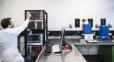
The Australian Industry Becquerel Traceability Program (AIBTP) provides facilities with direct measurement traceability to the Australian standard for the activity of radionuclides used in Positron Emission Tomography (PET).
The NSW Government will invest $12.5 million to support the expansion of the Innovation Precinct at the Lucas Heights campus of the Australian Nuclear Science and Technology Organisation (ANSTO).
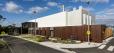
ANSTO's Mo-99 manufacturing facility secures Australia’s ability to produce Mo-99 to meet current and future domestic demand and provide a significant proportion to support global demand.
The Japanese experience with leading-edge radiation treatment for cancer shows tremndous success