Wasteform Scientist


Showing 1761 - 1780 of 2202 results
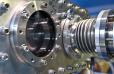
Recoil Time of Flight Spectrometry (RTOF) is used to detect a multitude of elements by separating their masses. unambiguously
An international team of academic researchers led by Curtin University have provided a description of a new species of pterosaur, a flying reptile.

Cynthia is graduate engineer working at ANSTO. She has a background in Mechatronic and Robotic Engineering (at Monash University). She has worked on developing an autonomous drone for her university thesis.

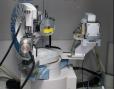
This instrument can measure reflectivity at air-solid or air-liquid interfaces.
Accurate low level tritiated water (HTO) data is an essential tool for groundwater dating and understanding groundwater recharge processes.
Frequently Asked Questions on the Macromolecular Crystallography beamlines (MX1 and MX2)

The User Advisory Committee (UAC) are pleased to present this year's invited speakers.
A large team of international researchers have used synchrotron techniques to understand how key proteins contribute to the virulence of the rabies virus, sometimes called the “zombie virus.”
Pioneering work on materials for energy production, such as lithium ion batteries, has made ANSTO a centre of specialist capabilities and expertise.
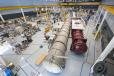
The Australian Centre for Neutron Scattering (ACNS) is a major research facility for neutron science that comprises a suite of neutron instruments with a range of techniques for scientific investigations in physics, chemistry, materials science, medicine and environmental science among other fields.
ANSTO scientists share approach on the global stage at the IAEA General Conference.