Ultra-thin membrane developed for possible use in water filtration
Scientists from Monash, ANSTo and China have developed an ultra-thin membrane that could separate harmful ions from water or capture gases.


Showing 181 - 200 of 250 results
Scientists from Monash, ANSTo and China have developed an ultra-thin membrane that could separate harmful ions from water or capture gases.
Radiocarbon measurements at ANSTO’s Centre for Accelerator Science have supported research published that provided insights into what the environment was like for the Aboriginal artists who created rock art over intervals spanning 43,000 years.
Radiocarbon study provides insight into soil carbon dynamics and effects of agriculture.
Research has helped build a record of rainfall during the late Pleistocene and Holocene, and shed light on the strategies of Indigenous Australians to cope with a changing landscape.
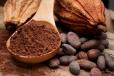
New international limits on the cadmium content of cacao products have spurred research to discover how cadmium accumulates in cacao beans, and the effects of processing.
SVSR is seeking a highly motivated engineering candidate with excellent communication skills to help better understand and manage odour emission from sewer ventshafts.
The Australian Academy of Technology and Engineering (ATSE) has elected Professor Andrew Peele, Director of ANSTO’s Australian Synchrotron, to become a Fellow of the prestigious organisation.
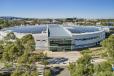
ANSTO is seeking nominations for the ANSTO Australian Synchrotron Stephen Wilkins Thesis Medal.
ANSTO is seeking nominations for the ANSTO Australian Synchrotron Stephen Wilkins Thesis Medal.
One of ANSTO’s most accomplished scientists and internationally recognised energy researchers, Prof Vanessa Peterson, has been awarded the Nancy Millis Medal for Woman in Science by the Australian Academy of Science this week.
A large collaboration of Australian and New Zealand researchers has established that a thin film technology can be used to monitor stormwater effectively and provides a way to translate the presence of metal contaminants into potential risks to aquatic ecosystems.
Two ANSTO scientists were part of a research team led by the University of Wollongong, who are finalists for the 2019 NSW Environment, Energy and Science (DPIE) Eureka Prize for Environmental Research.
Researchers developing new materials and devices that can withstand the harsh radiation environment in space are using the unique ANSTO’s capability to simulate the effects of high-energy ion irradiation on the properties and performance of these materials and devices.
The National Deuteration Facility is providing deuterated cholesterol, an essential ingredient in lipid nanoparticles for the delivery of vaccines using mRNA, to academic and industry partners.
Research has revealed the Lapita cultural group interacted with the indigenous people of Papua New Guinea more than 3,000 years ago and set the stage for the peopling of the Pacific
Elucidating molecular basis of the complex viscoelastic properties of polymers