The physics of producing nanoparticles
Measurement research undertaken to ensure safe, well-engineered nanoparticles


Showing 1881 - 1900 of 3560 results
Measurement research undertaken to ensure safe, well-engineered nanoparticles
This week, ANSTO hosted the 10th annual Regional Advisory Safety Committee for research reactors in Asia pacific (RASCAP). This a joint IAEA-Asian Nuclear Safety Network (ANSN) supported forum to foster networking and regional cooperation, and for facilitating use of competencies in the region to cover specific safety issues in research reactors.
A groundbreaking international study has provided new insights into global fossil methane emissions, using innovative multi-isotopic atmospheric measurements.
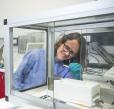
The Australian Nuclear Medicine Traceability Program (ANMTP) assists practices administering nuclear medicine-based radionuclides to achieve regulatory compliance by providing measurement traceability to the Australian Standard.
ANSTO is interested finding students to collaborate on Generation IV reactor systems.
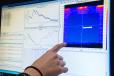
Specifications, Beryllium Filter, User Manual, Instrument reference
ANSTO, Australia’s knowledge centre for nuclear science and technology, connects STEM graduates with industry to work on real-world challenges through its FutureNow Scholarships for 2022.
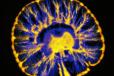
The Biosciences team undertakes the radiolabelling of chemical, biochemical. biological or material vector for the purpose of radiotracing in living systems.
ANSTO’s Innovation Precinct welcomes NSW Government’s $12.5 commitment funding.
A new radiocarbon dating facility opened at the University of New South Wales (UNSW) will complement the extensive radiocarbon facilities at ANSTO’s world-leading Centre for Accelerator Science
Technique provides insights into historic maritime artefact linked to early exploration of Australia.
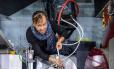
The instrument is very well suited for the study of kinetic effects, like relaxation following a chemical reaction, or external impulses like mechanical deformation, an electric or magnetic field.
Young researcher accepted into the Australian Antarctic Science Program.
Scandium 47, a therapeutic radioisotope and potential theranostic, has been produced for the first time at ANSTO. Theranostics are used to both diagnose and treat disease.
An Australian-led international research team, including a core group of ANSTO scientists, has found that doping a promising material provides a simple, effective method capable of extracting uranium from seawater.