
Travel Funding
ANSTO may provide travel and accommodation support to successful grant applicants from AINSE member organisations. Travel funds granted are to be used solely to cover the majority of the cost to travel to Sydney.


Showing 1921 - 1940 of 2448 results
ANSTO may provide travel and accommodation support to successful grant applicants from AINSE member organisations. Travel funds granted are to be used solely to cover the majority of the cost to travel to Sydney.
More than 3,200 solar panels have been installed across the rooftops of the Australian Nuclear Science and Technology Organisation’s (ANSTO) Australian Synchrotron in Clayton, offsetting enough power to light up the whole MCG for more than five years.
An international team led by scientists at City University of Hong Kong has found flexible metal-organic framework (MOF) with one-dimensional channels that acts as a “molecular trapdoor” to selectively adsorb gases, such as carbon dioxide, in response to temperature and pressure changes.
A research team from ETH Zurich developing and characterizing silicon carbide devices for power electronics, recently spent time at ANSTO’s Centre for Accelerator Science to use a specialised beamline in their investigations.

The Program Advisory Committees review proposals submitted to a particular beamline at the Australian Synchrotron
A groundbreaking international study has provided new insights into global fossil methane emissions, using innovative multi-isotopic atmospheric measurements.

Research to understand how contaminants move through the soil and affect ecosystems and humans as well estimating emissions.

ANSTO provides a range of radiotracers for pre-clinical and clinical research using the OPAL multipurpose reactor. Users can access more than 300 known radiotracers. If a starting material is provided, new and non-commercial radiotracers can be produced.

Accommodation Information
Four annual awards in neutron scattering were announced at Australian Neutron Beam Users Group (ANBUG) and AINSE Neutron Scattering Symposium (AANSS) to individuals with strong links to ANSTO

On the 10th of October 2025, the Minister for Industry, Science and Technology provided his Statement of Expectations to ANSTO.
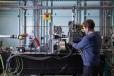
Data analysis on the X-ray fluorescence microscopy beamline at the Australian Synchrotron.
ANSTO is interested finding students to collaborate on Generation IV reactor systems.
Understanding how COVID supresses the immune system may lead to antiviral strategies