

Showing 1 - 16 of 16 results
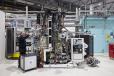
Soft x-ray spectroscopy
Soft x-rays are generally understood to be x-rays in the energy range 100-3,000 eV. They have insufficient energy to penetrate the beryllium window of a hard x-ray beamline but have energies higher than that of extreme ultraviolet light.

Co-Director - Health Research and Technology Group
John is currently one of two co-Directors of the Health Research and Technology Group at ANSTO.
He is Director of the ANSTO node of the NCRIS National Imaging Facility and is a member of the NIF Scientific Advisory Committee.
It's GO time
nandin member, SVSR, report on their proof-of-concept for a reusable Graphene Oxide (GO) membrane to capture waste water vapours from ageing sewerage systems.

Highlights - Aerosol Sampling
ANSTO has been tracking and publishing data on fine particle pollution from key sites around Australia, and internationally, for more than 20 years.
Headed to Antarctica
Young researcher accepted into the Australian Antarctic Science Program.
Revealing the sources of Sydney’s air pollution

Professional Officer
Role at ANSTO
Novel research gives more clues about minerals under pressure within earth or other planets
A study has provided insight into copper sulfate pentahydrate and could give clues to how other hydrated minerals change under the pressures within planetary environments
A step closer to understanding superconductivity with large international collaboration
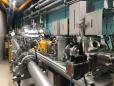
Medium Energy X-ray Absorption Spectroscopy Beamline (MEX-1 and MEX-2)
The Medium Energy- X-ray Absorption Spectroscopy beamlines provides access to XANES and EXAFS data from a bending magnet source, optimised for cutting-edge applications in biological, agricultural and environmental science in an energy range that is not currently available at the Australia Synchrotron.
Research reveals little water connectivity between coal seam gas and aquifers
Insights into soil fertility can help guide more targeted fertiliser strategies for long-term soil management across Australia
Study revealed that the chemical forms of sulfur change when land is converted from undisturbed soils to cropping soils and forms of sulfur which bind strongly to the soil mineral particles remains far more stable.
Landmark achievement opens pathway for treatment of drug-resistant tuberculosis
ANSTO has contributed to a recent publication in Nature Communications Biology that represents a landmark achievement in structural biology, an understanding of protein regulation mechanisms in Mycobacterium tuberculosis (Mtb), a global health threat.

Publications
Publications and resources from the Powder Diffraction beamline.

Archive
Archive of ANSTO research publications, seminars and short talks.