


Showing 1 - 16 of 16 results

Eduroam Service
ANSTO provides eduroam services for partnering institutions in Australia and around the world.

Privacy Policy
Australian Nuclear Science and Technology Organisation (ANSTO) is committed to protecting your personal information in accordance with the Privacy Act 1988 (Cth) (Privacy Act) and the Australian Privacy Principles.
Fossils go nuclear

Senior Scientist – Nanoprobe
Role at ANSTO

Visitor Terms and Conditions
On behalf of ANSTO thank you for your interest in our tours. We hope your visit to ANSTO will be both enjoyable and informative.
A look back at the monumental achievement of constructing the OPAL reactor
INVAP, the Argentinian advanced nuclear technology company, who designed and constructed the Open Pool Lightwater Reactor (OPAL) for ANSTO to replace the HIFAR reactor is celebrating 50 years of operations with the visit of a group of INVAP executives to ANSTO to celebrate their achievements and discuss future collaborations.
Australia completes first phase of its waste repatriation project
TSPO: Ancient gene ignites potential for drug development
Netflix series 'Radioactive Emergency' reviewed by ARPANSA and ANSTO radiation experts
Blake Orr from ARPANSA review the Netflix series Radioactive Emergency.
New species of rare 100-million years old flying reptile found in Australia
An international team of academic researchers led by Curtin University have provided a description of a new species of pterosaur, a flying reptile.

Group Manager - Scattering
Role at ANSTO

Advanced Diffraction & Scattering Beamlines (ADS-1 and ADS-2) UNDER CONSTRUCTION
The Advanced Diffraction and Scattering beamlines (ADS-1 and ADS-2) are two independently operating, experimentally flexible beamlines that will use high-energy X-ray diffraction and imaging to characterise the structures of new materials and minerals.

Industrial Liaison Manager - Senior Research Scientist
Role at ANSTO
Small Modular Reactors: An overview
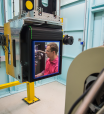
High Performance Macromolecular Crystallography Beamline (MX3)
The High Performance Macromolecular Crystallography beamline will enable the study of very small (sub-5 micrometre) or weakly diffracting crystals, providing a state-of-the-art high-throughput facility for researchers. MX3 will be able to study the structures of large proteins and protein complexes for virology, drug design and industrial applications via goniometer mounted crystals, in-tray screening, or via serial crystallography methods.