Understanding fine particle pollution
Thirty years of ANSTO's unique capability in monitoring fine particle pollution provides insight on bushfire smoke.


Showing 1 - 20 of 38 results
Thirty years of ANSTO's unique capability in monitoring fine particle pollution provides insight on bushfire smoke.
ANSTO has played a formative role and continues to make important contributions using nuclear and isotopic techniques to understand past climates and patterns of change, maintain water resource sustainability and provide insights into the impact of contaminate in the environment.
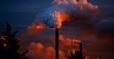
ANSTO has been tracking and publishing data on fine particle pollution from key sites around Australia, and internationally, for more than 20 years.
New high energy ion microprobe beamline supports space research on the effects of radiation on astronauts.
ANSTO has secured a $1.62 million Medical Research Future Fund (MRFF) grant under the Australian Brain Cancer Mission’s 2024 Brain Cancer Discovery and Translation program

Explore ANSTO's range of publications and reports available for the public.

Discover the amazing world of nuclear science from your classroom. Join us for Meet an Expert, Nuclear Science Inquiry Skills, Junior Science, and Online Depth Study sessions for Chemistry, Physics and Investigating Science.
Study helps make carbon dating a more accurate chronological tool.
Nine PhD students are taking part in a rare opportunity to deliver an innovative solution to a real-world challenge for an industry partner in ANSTO’s National Graduate Innovation Forum in association with the Australian Council of Deans of Science and the Australian Institute of Nuclear Science and Engineering.
Scientists at ANSTO characterise structures with atomic detail using probes such as x-rays, electrons, neutrons and ions.
In Part 2 of our series exploring the world of nuclear science and technology at ANSTO, we share more detailed information about the nuclear scientist’s toolkit.
Four international authorities will deliver plenary addresses virtually at the 15th International Conference on Accelerator Mass Spectrometry (AMS15) , which will be held online from 15-19 November.
ANSTO commenced an aerosol sampling program thirty years ago this week to characterise these pollutants and ultimately, identify their sources, which has taken it to the forefront of environmental monitoring of this type in Australia and the region.
Dr Andrew Smith has just finished collecting ice cores and snow samples on the summit of Law Dome in Antarctica,
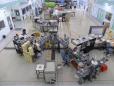
The 2MV STAR tandem accelerator, performs both IBA and AMS analyses
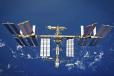
In space, without the protection of the magnetosphere, the type and dose of radiation is considerably different to what is naturally experienced on earth. However, it is the secondary particles of lower energies created when galactic and cosmic radiation interacts with shielding that is of concern for astronauts.
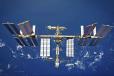
In collaboration with the French National Institute of Health and Medical Research (INSERM) and the French International Space Agency (CNES), ANSTO scientists are undertaking research on the radiobiological effects of secondary particles that are created when radiation interacts with the shielding on the International Space Station.
ANSTOs capabilities are ideally suited for these investigations relating to quantum technologies.