It's GO time
nandin member, SVSR, report on their proof-of-concept for a reusable Graphene Oxide (GO) membrane to capture waste water vapours from ageing sewerage systems.


Showing 1 - 20 of 1900 results
nandin member, SVSR, report on their proof-of-concept for a reusable Graphene Oxide (GO) membrane to capture waste water vapours from ageing sewerage systems.
Collaboration finds that old carbon reservoirs are unlikely to cause a massive greenhouse gas release in a warming world.
Dr Catalina Curceanu will explore exotic atoms and impossible phenomena in the universe.
Australia’s Nuclear Science and Technology Organisation (ANSTO) is well-known for facilitating incredible science and creating life-saving nuclear medicines, but for the last 40 years it’s been quietly producing a largely unsung net zero hero: Neutron Transmutation Doped (NTD) silicon.
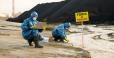
Billions of tonnes of iron ore tailings are generated each year from the mining industry. Converting these toxic tailings into soil-like materials which can develop and sustain plant and microbial communities is critical for mine site remediation and improved environmental outcomes.
The NSW Government will invest $12.5 million to support the expansion of the Innovation Precinct at the Lucas Heights campus of the Australian Nuclear Science and Technology Organisation (ANSTO).
Year 11 STEM student and aspiring physicist was given the opportunity of a lifetime to tour ANSTO’s Lucas Heights campus and meet some of Australia’s top researchers.

With the support of the Sir William Tyree Foundation, ANSTO is offering two career development opportunities for young Indigenous Australians in the area of work, health and safety.
Research indicates that the portable x-ray fluorescence (XRF) is an appropriate analytical technique for determining seafood provenance at external sites.
ANSTO Physicist Andrew Smith collaborates with international scientists to study historical greenhouse gas concentrations from Antarctic ice core samples.
This data set contains temperature records and concentrations of carbon dioxide and methane from the last 800,000 years.
An international team led by scientists at City University of Hong Kong has found flexible metal-organic framework (MOF) with one-dimensional channels that acts as a “molecular trapdoor” to selectively adsorb gases, such as carbon dioxide, in response to temperature and pressure changes.
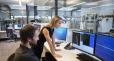
The Centre for Accelerator Science provides complementary capabilities to Synchrotron-based and the neutron-based research with the operation of four accelerators, associated beamlines, clean laboratories and in-house expertise in ion beam analysis (IBA) and accelerator mass spectrometry (AMS).
ANSTO welcomes the recent announcement that the inaugural CEO for the Australian Radioactive Waste Agency (ARWA) has been appointed, following a global search. Mr Sam Usher will lead ARWA and comes to the role with almost three decades of experience in the nuclear industry.
The ARC Centre of Excellence (CoE) for Green Electrochemical Transformation of Carbon Dioxide, GETCO2, will support innovative approaches to carbon capture.
New facility will greatly enhance Australia’s capability in stress engineering for industry