

Showing 21 - 40 of 151 results
Plans to safely manage medical and research waste
ANSTO will make an application to the independent nuclear regulator, ARPANSA, to vary its license for its Interim Waste Store. The original operating license was approved in 2015, enabling the facility to hold what is called a TN-81 cask of intermediate-level radioactive waste that was safely repatriated from France in 2015.
What are radioisotopes?
Radioisotopes are widely used in medicine, industry, and scientific research. New applications for radioisotopes are constantly being developed.
Murray River earth mounds reveal Aboriginal cooking practices spanning 4000 years
Radiocarbon dating at ANSTO has supported new archaeological research conducted by Flinders University and the University of Queensland that describes significant earth mound features used for cooking that were created by Aboriginal people in the Riverland region of South Australia.
Stable Isotope Ratios
Stable isotopes are high useful in investigations of environmental samples.
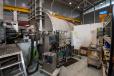
Services - Platypus
Sample environments, Data Analysis.

Governance
ANSTO is a highly regulated organisation. Our governance system and processes provide critical guidance to effectively manage ANSTO’s activities. This section outlines the processes and systems that are in place to provide assurance to Government, our stakeholders and the community that we are working within our regulated and mandated requirements.
Plans continue to repatriate medical and research radioactive waste
Australia’s nuclear agency ANSTO is continuing to lead planning efforts to repatriate what is called a TN-81 cask of intermediate-level radioactive from the United Kingdom in 2022.
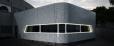
Advanced Diffraction & Scattering Beamlines (ADS-1 and ADS-2) UNDER CONSTRUCTION
The Advanced Diffraction and Scattering beamlines (ADS-1 and ADS-2) are two independently operating, experimentally flexible beamlines that will use high-energy X-ray diffraction and imaging to characterise the structures of new materials and minerals.
Leading fine particle pollution monitoring reaches 30yr milestone & looks to the future
ANSTO commenced an aerosol sampling program thirty years ago this week to characterise these pollutants and ultimately, identify their sources, which has taken it to the forefront of environmental monitoring of this type in Australia and the region.
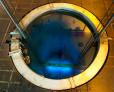
Gamma irradiation
ANSTO operates a range of cobalt-60 gamma irradiators, providing the Australian community with a range of irradiation services for medical, health, industry, agriculture and research purposes.
The risks posed by stormwater runoff can be monitored with thin-film technology
A large collaboration of Australian and New Zealand researchers has established that a thin film technology can be used to monitor stormwater effectively and provides a way to translate the presence of metal contaminants into potential risks to aquatic ecosystems.
Community FAQs
Frequently asked questions about ANSTO for the community.
Sydney Access Proposals
View the upcoming proposal deadlines for access to ANSTO’s Research Portal. The User Office provides support for research proposals and enables you to leverage our world-class research infrastructure and facilities.

Data sets
Your students can analyse real research data from ANSTO scientists.
ANSTO contributes to state-wide survey of groundwater resources in NSW
ANSTO groundwater experts have collaborated with the NSW Department of Planning, Industry and Environment on a comprehensive survey of groundwater resources in the state.
Technological innovation and partnership needed to make progress on mental disorders
ANSTO’s Dr Karina Meredith appointed to UN scientific panel on the effects of nuclear war
The panel will investigate a wide range of potential effects spanning radiological, environmental, climatic, agricultural, public health, and socio-economic impacts, through a scientifically rigorous and independent lens.
Greater Sydney Commission and ANSTO reveal innovation plans for Sydney’s South
Compressed sensing technology
Using the theory of compressed sensing technology, a team of physicists and scientists invented and developed the CORIS360® platform imaging technology. Compressed sensing imaging can generate an image with far fewer samples compared with traditional imaging techniques.