Expertise in characterising materials for lithium ion batteries
Pioneering work on materials for energy production, such as lithium ion batteries, has made ANSTO a centre of specialist capabilities and expertise.


Showing 21 - 40 of 509 results
Pioneering work on materials for energy production, such as lithium ion batteries, has made ANSTO a centre of specialist capabilities and expertise.
Indigenous development program and nuclear science and engineering scholarships will be funded


ANSTO Environmental Researcher Scott Chambers uses a naturally-occurring radioactive gas called Radon-222 to trace sources of pollution in the atmosphere.
This data set contains hourly observations of meteorology, trace gas pollutants, Radon-222 concentration and traffic density collected from Western Sydney University (Richmond campus) in 2016.
The ANSTO Australian Synchrotron User Meeting highlighted excellence in synchrotron science through the Early Career Research and Mid-Career Research, Lifetime Contribution and the Stephen Wilkins Thesis Medal.
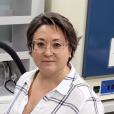
Dr Inna Karatchevtseva undertakes work at ANSTO in two main areas: defence industry research and fundamental materials research.
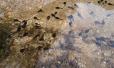
Radioisotope tracing technique are used to understand the uptake of contaminants, and nutrients, bioaccumulation, by aquatic organisms and terrestrial plants.
The outcome could have significant implications for better monitoring, management and remedial action of groundwater globally.
Jobs supported through the nandin Innovation Centre at ANSTO have skyrocketed 360 per cent since opening, with member businesses raising more than $3.9 million in capital, in a major boost for the local Sutherland Shire economy.
A large group of ANSTO environmental scientists and collaborators have produced the first groundwater stable isotopes, ‘isoscapes’, intuitive maps with grid data, across NSW combining new and pre-existing isotope measurements.
Federal Parliament’s House Standing Committee on the Environment and Energy has presented its report, arising from its Inquiry into the prerequisites for nuclear energy in Australia today.

New energy technologies, including hydrogen production, are being investigated to achieve decarbonisation.
The process by which plastic degrades in the ocean facilitates its entry into the natural carbon cycle efficiently as carbon dioxide.