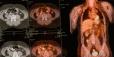
This fact sheet gives an overview of:
- Positron Emission Tomography (PET) scans
- Fluorine-18 and its decay
- Production of F-18 using a cyclotron
Showing 201 - 220 of 2395 results
Agreement extends Taiwan’s National Synchrotron Radiation Research Center’s operation of neutron scattering instrument at ANSTO
Ion beam analysis techniques can be used for trace element analysis and the surface characterisation of diverse materials.
An opportunity to take an unforgettable journey and explore ANSTO science virtually at the atomic scale for National #scienceweek
This fact sheet gives an overview of:
- Positron Emission Tomography (PET) scans
- Fluorine-18 and its decay
- Production of F-18 using a cyclotron
CORIS360® GNI images gamma-ray and thermal neutron radiation sources, delivering an unprecedented ability to detect, localise, and identify nuclear materials.
This workbook was designed for the old pre-2018 Year 12 Physics NSW syllabus, 9.6 Medical Physics and 9.8 Quanta to Quarks
This workbook was designed for the old pre-2018 Year 12 Chemistry NSW syllabus, 9.2 Production of Materials
$80.2 million in new funding to expand the research capabilities of the Australian Synchrotron.
Our Year 12 Earth and Environmental Science tour covers specific Knowledge and Understanding content from Module 5: Earth Processes, Module 6: Hazards, and Module 7: Climate Science.
All tours are available Monday to Friday for Years 7 to 12 classes. The cost per student is $12.50 and teachers are free.
Please print enough copies of the relevant workbook for your class before your visit to ANSTO.
The samples preparation facilities include state-of-the-art chemistry laboratories and other specialist supporting areas
ANSTO scientist, Dr Klaus Wilcken of the Centre for Accelerator Science, used cosmogenic nuclide dating to determine the ages of layered sand and gravel samples, in which seven footprints of the flightless bird, the moa, were found on the South Island in New Zealand in 2019.