Instrument Scientist


Showing 2141 - 2160 of 2601 results
Technical information for the Powder Diffraction beamline at the Australian Synchrotron.
Micro-Particle Induced X-ray Emission (µPIXE) is used to construct elemental maps that show variations of an element's concentration across the sample surface.
Dr Anne Hellstedt has been appointed Director of ANSTO’s Innovation Precinct.
Given the importance of water in Australia, surprisingly, there is relatively little information about the past variability of rainfall on this continent. Although there is a good annual record of the past 100 years in Australia, there is nothing much before that period and no known cave deposit records exist for New South Wales.
This month, ANSTO hosted a delegation from the International Partnership for Nuclear Disarmament Verification (IPNDV) as part of the IPNDV’s Plenary meeting in Sydney. The meeting marked the first time Australia has hosted the IPNDV.
ANSTO among collaborators to major study of greenhouse gases.
Update on Nuclear medicine production at ANSTO.
Technical information on the Soft X-ray spectroscopy beamline at the Australian Synchrotron.

With significant expertise and capabilities in reactor technologies, ANSTO works collaboratively with academia and industry on specific projects that benefit the Australian technology sector.

A free, nationwide science competition for primary and secondary school students in Years 3 to 10, Think Science! encourages students to work as part of a team to perform an investigation using the Science Inquiry skills from the Australian Curriculum and document their process and findings in a video. Over $10,000 in prizes are on offer for winning schools and students.
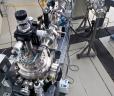
Particle induced gamma-ray emission (PIGE) is typically run in conjunction with PIXE and RBS and is used to quantify concentrations of elements such as lithium, fluorine, sodium, magnesium and aluminium.

The Biosciences team undertakes the radiolabelling of chemical, biochemical. biological or material vector for the purpose of radiotracing in living systems.

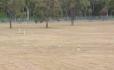
ANSTO is responsible for the Little Forest Legacy Site (LFLS) located within the ANSTO Buffer Zone boundary. This site, formerly known as the Little Forest Burial Ground (LFBG), was used by the Australian Atomic Energy Commission (AAEC) during the 1960’s to dispose of waste containing low levels of radioactivity and beryllium oxide (non-radioactive) in a series of shallow trenches. There has been regular monitoring of the site since 1966 and the results have been reported in ANSTO’s environmental monitoring reports.

The Radon Analytical Laboratory operates a comprehensive suite of instrumentation for the monitoring and analysis of natural radioactivity resulting from radon, thoron and their progeny.