Tom Cresswell joins Science & Technology Australia
Environmental researcher joins Science & Technology Australia as Cluster representative for the Chemical Sciences


Showing 261 - 280 of 990 results
Environmental researcher joins Science & Technology Australia as Cluster representative for the Chemical Sciences
Agreement extends Taiwan’s National Synchrotron Radiation Research Center’s operation of neutron scattering instrument at ANSTO
Modifications to promising novel non-fullerene small molecule acceptor in organic thin film for solar cells demonstrates improved power conversion efficiency.
Using the past to illuminate the future: Brothers collaborate on important science documentary for ABC TV
The panel will investigate a wide range of potential effects spanning radiological, environmental, climatic, agricultural, public health, and socio-economic impacts, through a scientifically rigorous and independent lens.
Combined imaging approach characterises plaques associated with disease.
A collaboration of Australian scientists has used ANSTO’s Australian Synchrotron to measure the amount of carbon that is captured in microscopic seams of deep-sea limestone, which acts as a carbon sink.
A sparrow with 257 parts weighing more than 29 tonnes arrives safely at ANSTO
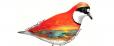
Shorebirds Competition 2021 results.
ANSTO physicist supports launch of new carbon ion therapy treatment service in Austria.
The Australian Synchrotron has played a crucial role in the discovery of a new cancer drug for the treatment of leukaemia.

Accommodation Information
ANSTO’s own meteorite hunter, who is also a planetary scientist and instrument scientist Dr Helen Brand took part in an expedition led by Professor Andy Tomkins of Monash University that has found the largest meteorite strewn field in Australia since the famous Murchison meteorite event in 1969.
ANSTO has contributed to research that indicated that Aboriginal people had a broad diet and intensive plant processing technologies, allowing them to respond to changes in climate, sea level and vegetation over the last ca. 65,000 years.