Search hero banner

Search results

Showing 281 - 300 of 1371 results

Going underground to understand Australia's past climate variability

Given the importance of water in Australia, surprisingly, there is relatively little information about the past variability of rainfall on this continent. Although there is a good annual record of the past 100 years in Australia, there is nothing much before that period and no known cave deposit records exist for New South Wales.

Hear more from ANSTO

Subscribe

Be the first to find out the latest news regarding nuclear science and technology products, services, and innovation.

Soft x-ray spectroscopy

Soft x-ray spectroscopy

Soft x-rays are generally understood to be x-rays in the energy range 100-3,000 eV. They have insufficient energy to penetrate the beryllium window of a hard x-ray beamline but have energies higher than that of extreme ultraviolet light.

Data sets

Data sets

Your students can analyse real research data from ANSTO scientists.

Materials in extreme environments

Materials in extreme environments

Material researchers at ANSTO use a range of in-house capabilities in the development, testing and characterisation of existing and emerging materials for extreme environments of the novel nuclear (fission/fusion) based energy-generation systems.

Shielding space shuttle

Materials in extreme environments

Materials researchers focus on development, performance and in-service degradation of nickel-based superalloys, reinforced carbon-Carbon (C/C) composites, and ultra-high temperature ceramics (UHTC).

Iron and Fire

Using geoarchaeology to reconstruct the history of an ancient Khmer city.

France city-scape

SAAFE Research Internship Program

The SAAFE Program supports early career researchers at PhD and Postdoctoral level to expand research and innovation activities within Human Health, the Environment and the Nuclear Fuel Cycle, to initiate sustainable research networks and linkages to support Australia, New Zealand and France research and innovation.

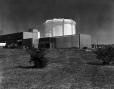
hifar-history-web

Our History

In April 15, 1953, Australia entered the nuclear science arena, when the Atomic Energy Act came into effect. The Australian Atomic Energy Commission (AAEC) followed and in 1987 the AAEC evolved into the Australian Nuclear Science and Technology Organisation (ANSTO) as it’s known today.

Pagination