Funding supports seafood traceability
Grant supports development of handheld technology to verify origin of seafood.


Showing 281 - 300 of 796 results
Grant supports development of handheld technology to verify origin of seafood.

The Biological Small Angle X-ray Scattering beamline will be optimised for measuring small angle scattering of surfactants, nanoparticles, polymers, lipids, proteins and other biological macromolecules in solution. BioSAXS combines combine a state-of-the-art high-flux small angle scattering beamline with specialised in-line protein purification and preparation techniques for high-throughput protein analysis.
In 2023 we’re celebrating the 70th Anniversary since Australia began developing our nation’s Australia’s nuclear capabilities.
Sample environments, Data Analysis, Mail-in Services.
Minister for Industry and Science, the Hon Ed Husic MP has formally announced the appointment of Mr Andrew Carriline as ANSTO Board Deputy Chairperson, effective from Thursday 9 May 2024.
Connect with the businesses and organisations seeking better understanding decommissioning oil and gas infrastructure and the potential impact of contaminants on marine life.

Efficient electro-catalysis of hydrogen from seawater represents a low-cost, abundant source of clean energy.
ANSTO is taking its innovative ANSTO Synroc® and CORIS360® technologies to the world stage at the Waste Management Symposia 2024 in Phoenix, Arizona USA this week (10 – 14 March 2024). Joining over 45 other countries and around 3,000 attendees, an Australian Government contingent comprising of ANSTO and the Australian Radioactive Waste Agency is in attendance to showcase Australia’s extensive radioactive waste management capabilities.
ANSTO has an association with Ouranos Systems, a company that is developing robust nuclear-based power solutions for satellites and space vehicles.
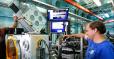
The SAXS / WAXS beamline at the Australian Synchrotron is a highly flexible x-ray scattering facility with purpose-built optics and a very flexible endstation and SAXS camera enable multiple types of experiments.
ANSTO is a partner on the National Space Qualification Network (NSQN) led by the Australian National University (ANU) that will transform Australia into a world-leading space centre by enhancing facilities to test payloads, components, and hardware prior to their use in harsh environments of space.

Defence requirements push your technology, we can help. ANSTO is home to some of Australia’s most important landmark research infrastructure – more than $1.3bn of it. Our unique capabilities are used by thousands of Australian researchers from industry and academia every year.
ANSTO is interested finding students to collaborate on Generation IV reactor systems.
An international research collaboration between the University of New South Wales (UNSW), the Shanghai Institute of Applied Physics (SINAP) and ANSTO has provided insights into the performance of advanced material for use in the high-temperature environment of molten salt systems.
The first demonstration of reversible symmetry lowering phase transformation with heating.

ANSTO's OPAL reactor is one of the world's most advanced and reliable research reactors today. To ensure we can continue operating OPAL safely and reliably and maximise utilisation, ANSTO must regularly carry out maintenance and upgrades.
Research infrastructure will support research and development of advanced concrete.