

Showing 281 - 300 of 2448 results
Innovation forum will benefit graduates and Australian industry
The first National Graduate Innovation Forum will be held in November to connect PhD students with representatives from four of Australia’s leading industries to apply scientific thinking to current real-world challenges.
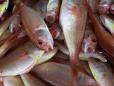
Research to improve food quality and design for better health
We are using nuclear and other methods to improve the traceability of food to ensure safety and security for consumers and industry, optimise the various functions of food and its production and understand the fundamental mechanisms that link some food to an immune response
The composition and manufacturing history of African swords revealed
ANSTO scientists were members of an inter-disciplinary team led by the University of Sydney, who examined six 19th century West African swords, using a non-invasive multi-methodological approach to reveal the composition and manufacturing history of the iron implements.
5th annual ANSTO awards in nuclear science and technology
Getting South Coast kids excited about science and engineering
IAEA acknowledges Australia’s nuclear expertise and stewardship during visit
ANSTO showcased its significant contribution to security, safety, and public health during a visit of the Director-General of the International Atomic Energy Agency (IAEA) Rafael Grossi, Minister for Industry and Science Ed Husic, Australian Ambassador to Austria Richard Sinclair and Ambassador for Arms Control and Counter-Proliferation Ian Biggs and other dignitaries at the weekend.
ABC showcases research on plants heading to the moon
ABC has reported space research on plants being sent to the moon at the Centre for Accelerator Science.
Combining irradiation and lithography to engineer advanced conducting materials
Fine tuning materials for energy storage using architectural design and structural engineering
Energy researchers from UNSW have reported progress using controlled architectural design and structural engineering as a method to fine-tune materials to have simultaneous high power and high energy density for the electrochemical storage in portable devices.
End of an era for Australia’s first nuclear reactor
ANSTO scientist and technical specialist recognised at Users Meeting
Professor Elliot Gilbert and Dr Norman Booth have received awards from the Australian Neutron Beam Users Group at the 2021 ANSTO Users Meeting
Producing fish oil without odour and a longer shelf life
Research undertaken by Flinders University, the University of Cincinnati (US), Guangzhou University (China) and ANSTO has evaluated a new process to encapsulate fish oil in nanoparticles
Science supports species survival by tackling contaminants and developing ingenious approaches
It's all about the interface with multi-use polymer brushes
The University of Newcastle and UNSW [GW1] are using advanced neutron scattering techniques at ANSTO to carry out research on the structure of polymers in complex salt environments that will ultimately provide a way to predict their behaviour for real-world applications.
ANSTO recruiting three new nuclear science and technology leadership positions
ANSTO is now accepting applications for three Director positions within the Nuclear Science and Technology group: The Director of the Nuclear Materials Research and Technology Group, Director of Environment Research and Technology Group and Director of the Health Research and Technology Group.
Neutrinos, atomic clocks and an experiment to detect a time dilation
Griffith University researchers are conducting an experiment at ANSTO that will test a revolutionary physics theory that time reversal symmetry-breaking by neutrinos might cause a time dilation at the quantum scale.
Hungarian Ambassador attends ceremony to mark installation of new imaging scanners
The Hungarian Ambassador to Australia and a small delegation visited ANSTO for a special ceremony to mark the installation and commissioning of two new nuclear medicine scanners from the Hungarian company Mediso Pacific.
Robotics hub to improve management of Australian infrastructure and assets
ANSTO participation in ARC on Intelligent Robotic Systems for Real-time Asset Management has potential benefit in the management of infrastructure and assets
Part 2: What does a radiation event cost the aviation industry?
The cost of building radiation-hardness testing into the design and qualification of electronics is typically well under one per cent of a major project’s budget.