Iron and Fire
Using geoarchaeology to reconstruct the history of an ancient Khmer city.


Showing 301 - 320 of 1181 results
Using geoarchaeology to reconstruct the history of an ancient Khmer city.

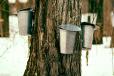
The sap extracted from Sugar Maple trees, is used to produce maple syrup. There are many conflicting theories and an absence of experimental evidence, regarding the mechanisms involved in maple sap exudation.
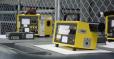
ANSTO offers reliable and traceable calibration services for radiation survey meters, contamination monitors and electronic personal dosimeters.

The Food Materials Science project applies nuclear-based techniques to investigate fundamental and industrial problems of national significance in food science, including food processing and product development. ingredient selection, food, and health

ANSTO has a range of capabilities and expertise to support aerospace and space research.

Melanie Calleja is passionate and enthusiastic about spreading the design thinking mindset to many people from a wide range of disciplines to help people ask better questions and think more creatively.
ANSTO groundwater experts have collaborated with the NSW Department of Planning, Industry and Environment on a comprehensive survey of groundwater resources in the state.

Discover the amazing world of nuclear science from your classroom. Join us for Meet an Expert, Nuclear Science Inquiry Skills, Junior Science, and Online Depth Study sessions for Chemistry, Physics and Investigating Science.

The United Uranium scholarship recognises outstanding ability and promise in the field of nuclear science and technology, specifically as it applies to nuclear energy.
Groundwater experts from ANSTO and UNSW have led a collaboration of Australian and American researchers to analyse the composition of deep, very old groundwater and develop a new conceptual framework that describes the degradation of carbon over time in the subsurface.
A lift for fish at Tallowa Dam: Study on dietary impacts.
Dr Mathew Johansen, an environmental scientist at ANSTO, presented in an online IAEA training workshop on Advanced Topics in Radiochemistry Techniques this week.
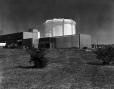
In April 15, 1953, Australia entered the nuclear science arena, when the Atomic Energy Act came into effect. The Australian Atomic Energy Commission (AAEC) followed and in 1987 the AAEC evolved into the Australian Nuclear Science and Technology Organisation (ANSTO) as it’s known today.
A study has provided insight into copper sulfate pentahydrate and could give clues to how other hydrated minerals change under the pressures within planetary environments