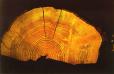
Radiocarbon dating
Radiocarbon dating is a well-known method for determining the age of materials up to the age of approximately 50,000 years.


Showing 301 - 320 of 615 results
Radiocarbon dating is a well-known method for determining the age of materials up to the age of approximately 50,000 years.
Dharawal Mural tells an ancient story. Aboriginal and Torres Strait Islander viewers are advised that webpage contains images of people who have died.

ANSTO has agreed to participate in an Australian trial of a review of research infrastructure access proposals in which applicants remain anonymous to aid the removal of structural barriers to the career progression of Women in STEM.

Investigations of various aspects of magnetism can be conducted on all neutron-scattering instruments at OPAL.
ANSTO has been granted a patent in Australia and a number of European countries for the separation, a key radioactive contaminant in critical minerals processing, actinium-227, from process liquors used in minerals extraction.
Successful synthesis of nano-material that improves catalytic converter efficiency.
ANSTO completed an international overnight dash for nuclear medicine earlier this week, chartering three planes to get potentially life-saving children’s cancer treatments from Japan to hospitals across Australia.

Australian-first detector to accelerate cancer research unveiled.
ANSTO Nuclear Fuel Cycle researcher recognised for contributions to crystallography and structural chemistry on actinides and lanthanides.
Principal Technical Consultant Michael Druce shares some personal insights on the design and construction of ANSTO's nuclear medicine facility.

Research has demonstrated that internally generated neutrons could be used to effectively target micro-infiltrates and cancer cells outside of the defined treatment regions.
The process by which plastic degrades in the ocean facilitates its entry into the natural carbon cycle efficiently as carbon dioxide.
Routine transport of spent nuclear fuel
At ACNS we currently have 13 instruments in our user program, which use a variety of scattering techniques to probe materials over a range of length scales.

The Think Science! competition encourages students in Years 3-10 to learn science inquiry skills in a fun and accessible way! Entry is FREE and there are generous prizes for winning schools. Any topic can be chosen, and special materials are not required.