Materials in extreme environments
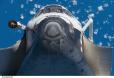
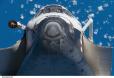
Materials researchers focus on development, performance and in-service degradation of nickel-based superalloys, reinforced carbon-Carbon (C/C) composites, and ultra-high temperature ceramics (UHTC).
Showing 301 - 320 of 643 results
Materials researchers focus on development, performance and in-service degradation of nickel-based superalloys, reinforced carbon-Carbon (C/C) composites, and ultra-high temperature ceramics (UHTC).
ANSTO and the National University of Singapore have signed an agreement to enable Singapore researchers to access ANSTO’s state-of-the-art beamline facilities at the Australian Synchrotron.
ANSTO was proud to support the first science-themed AuslanX event for the greater Sydney Deaf community during National Science Week.
ANSTO scientists have been featured in the new issue of Careers with STEM Science, a publication produced for high school students, undergraduates and grads, careers advisors, teachers and parents to discover careers and study paths.
Material researchers at ANSTO use a range of in-house capabilities in the development, testing and characterisation of existing and emerging materials for extreme environments of the novel nuclear (fission/fusion) based energy-generation systems.
Agreement extends Taiwan’s National Synchrotron Radiation Research Center’s operation of neutron scattering instrument at ANSTO
Role at ANSTO
ANSTO researchers are investigating nuclear propulsion systems for applications on the sea and in space.
ANSTO has been tracking and publishing data on fine particle pollution from key sites around Australia, and internationally, for more than 20 years.
Radioisotopes are widely used in medicine, industry, and scientific research. New applications for radioisotopes are constantly being developed.
A new study by researchers from Curtin University using the infrared (IR) and X-ray fluorescence microscopy (XFM) beamlines at the Australian Synchrotron has provided a better understanding of the chemical and elemental composition of latent fingermarks.
Science and medical experts meet in Adelaide to discuss great potential of particle therapy in Australia
To celebrate International Women’s Day, ANSTO opened its doors to more than 50 female STEM students who heard from two accomplished ANSTO’s female scientists and STEM champions.
A new radiocarbon dating facility opened at the University of New South Wales (UNSW) will complement the extensive radiocarbon facilities at ANSTO’s world-leading Centre for Accelerator Science
ANSTO scientists share approach on the global stage at the IAEA General Conference.