

Showing 321 - 340 of 520 results

About us
The Detection & Imaging group builds on ANSTO’s 70-year history of scientific achievements and contributions in meeting the nuclear needs of industry, globally.
Improving carbon dating
Study helps make carbon dating a more accurate chronological tool.

Role at ANSTO

Visit the Australian Synchrotron
ANSTO's Melbourne location is home to the ANSTO-owned and operated Australian Synchrotron. The Synchrotron is one of the Australia's most significant pieces of scientific infrastructure.
Space research collaboration
ANSTO launches new area of space research in collaboration with the National Centre for Space Studies and the National Institute of Health and Medical research in France.
Next-generation superconductors
Insights into atomic structure
Operations resumed at the Australian Synchrotron
Fossil provides world-first evidence of ancient marine behaviour in Gondwana
ANSTO has supported research that revealed for the first time that marine reptile ichthyosaurs consumed pterosaurs before becoming prey themselves to giant marine predators.
Role at ANSTO
Archive
See details of previously published customer updates from our Health products team.
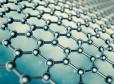
Scalable graphene growth on a semiconductor
The growth and incorporation of graphene into semiconductor device architectures has been limited by challenges related to the quality, reproducibility, and high process temperatures required to grow it on suitable substrates.
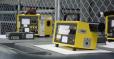
Instrument Calibration
ANSTO offers reliable and traceable calibration services for radiation survey meters, contamination monitors and electronic personal dosimeters.
Minerals expertise advances sustainable lithium ion battery production
Ultra-thin membrane developed for possible use in water filtration
Scientists from Monash, ANSTo and China have developed an ultra-thin membrane that could separate harmful ions from water or capture gases.
Graduate profile - Monica Hibberd & Hamish McDougall
Monica Hibberd and Hamish McDougall are working together on research into greener and more efficient energy and battery technology.
Scientists to tap underground African water supplies
History revealed
Dingo sees through heavy corrosion to help dentify an historic firearm.
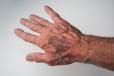
Identification and analysis of components in bruises
As blood breaks down in the skin tissue, the colour of a bruise changes with time. As such, it may be used to find out information about the age of the bruise and hence a timeframe of when the incident that caused the mark took place.