
Senior Instrument Scientist


Showing 321 - 340 of 410 results

Guidance for obtaining and maintaining human or animal ethics approval at the Australian Synchrotron.


Role at ANSTO
Researchers from ANSTO and NASA’s Jet Propulsion Laboratory have uncovered the likely mineral composition of Saturn’s largest moon, Titan, revealing a world of exotic organic crystals unlike any found on Earth.
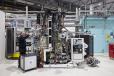
Soft x-rays are generally understood to be x-rays in the energy range 100-3,000 eV. They have insufficient energy to penetrate the beryllium window of a hard x-ray beamline but have energies higher than that of extreme ultraviolet light.
A new systematic investigation of the origins of atomic structural distortions in compounds containing uranium has relevance for spent nuclear fuel .


Archive of ANSTO research publications, seminars and short talks.

The nature of Metal-Oxide-Semiconductor Field Effect Transistors (MOSFETs) present a fascinating paradox in space exploration. Their strength in radiation detection becomes their weakness in space operations, exposing an Achilles' heel for NASA. Yet, these same devices monitor radiation doses received by humans on earth and in space.

Sample environments, Data Analysis, Mail-in Services.
ANSTO is interested finding students to collaborate on Generation IV reactor systems.
ANSTO researchers have demonstrated longstanding expertise in the study of nuclear fuel and radioactive waste with two recent journal articles in a special issue of Frontiers of Chemistry.

An Australian-led international research team, including a core group of ANSTO scientists, has found that doping a promising material provides a simple, effective method capable of extracting uranium from seawater.
The mining industry is set to benefit from a new Australian capability that uses a nuclear scanning technique to detect the presence of precious metals and strategic minerals in a core sample.
Monash University researchers have used advanced techniques at ANSTO to investigate the production of new, elongated polymer nanocapsules with a high payload of drug nanocrystals to potentially increase drug targetability, and also decrease dosage frequency and side effects.