ANSTO welcomes new Board Chair
ANSTO is pleased to welcome The Hon Dr Annabelle Bennett AO SC as the new ANSTO Board Chairperson, following the announcement from the Minister for Industry, Science and Technology.


Showing 381 - 400 of 1280 results
ANSTO is pleased to welcome The Hon Dr Annabelle Bennett AO SC as the new ANSTO Board Chairperson, following the announcement from the Minister for Industry, Science and Technology.
More than 3,200 solar panels have been installed across the rooftops of the Australian Nuclear Science and Technology Organisation’s (ANSTO) Australian Synchrotron in Clayton, offsetting enough power to light up the whole MCG for more than five years.
Earlier this month, ANSTO welcomed a delegation of Elders from the Willandra Lakes Region World Heritage site to its Lucas Heights campus. The visit marked a significant collaboration between Traditional Custodians and scientists working to uncover the environmental history of Lake Mungo.
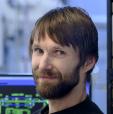
Dr Klaus Wilcken is an accelerator mass spectrometry scientist at the Centre for Accelerator Science (CAS) with over 12 years of experience with suite of AMS isotopes & techniques.
A 'Challenge-Based Innovation' platform at the nandin Innovation Centre is progressing as part of a funding package from the NSW Government and a Memorandum of Understanding with Swinburne University of Technology and Design Factory Melbourne (DFM).
An environmental study supported by a citizen science project at ANSTO and UNSW has brought greater understanding of the movement of birds between all of Australia’s major water basins and the importance of the Murray-Darling River Basin.
A team of scientists led by Monash University and the University of Melbourne in association with the Peter Doherty Institute for Infection and Immunity have made progress in clarifying the molecular interactions that underpin how our adaptive immune cells recognise SARS CoV-2, which causes COVID-19.
An international collaboration led by The University of Sydney and supported by ANSTO has developed an advanced, innovative artificial intelligence application that could be used to help examine tissue samples and identify signs of disease/
The Australian Academy of Technology and Engineering (ATSE) has elected Professor Andrew Peele, Director of ANSTO’s Australian Synchrotron, to become a Fellow of the prestigious organisation.
Three new federal grants were announced to support manufacturing and nuclear technologies.
Research collaboration with University of Sydney focuses on a personalised approach to cancer treatment.
A targeted radioactive infusion that is a game-changer in late-stage prostate cancer can also dramatically improve outcomes for patients in earlier stages of this disease, a Peter Mac-led study has shown.
ANSTO to ensure ultra-low radiation environment in newly-funded Stawell Underground Physics Laboratory.
Your efforts are helping better manage our wetlands and waterways, and protect the precious wetland birds that rely on them.
Prof Lyndon Edwards recognised for for excellent sustained contribution to materials engineering