

Showing 421 - 440 of 1113 results
nandin unlocks 400 years of business expertise
New mentor program offers deep brains trust to support the development of southern Sydney startups
Nuclear technique supports industry-led action plan to phase out packaging with PFAS chemicals
Testing at ANSTO’s Centre for Accelerator Science supports an action plan just published by the Australian Packaging Covenant Organisation (APCO) to phase out per- and polyfluoroalkyl substances (PFAS) in fibre-based food contact packaging in Australia by December 2023.

UM2022 Speakers
Powerful insights into hyperaccumulator plants
Combining X-ray techniques brings insights
Expertise in characterising materials for lithium ion batteries
Pioneering work on materials for energy production, such as lithium ion batteries, has made ANSTO a centre of specialist capabilities and expertise.

Statement of Expectations
On the 10th of October 2025, the Minister for Industry, Science and Technology provided his Statement of Expectations to ANSTO.

User Meeting 2020 Invited Speakers
The User Advisory Committee (UAC) are pleased to present this year's invited speakers.
Getting the facts on milk fats: Melbourne research with potential to help premature babies digest milk
National Science Week: Success with virtual events
Virtual activities celebrating the benefits of nuclear science and technology held for National Science Week
Revealing the 'hidden half' of grain using imaging at ANSTO's Australian Synchrotron to benefit Australian agriculture
Professor of Soil Science at The University of Queensland, Peter Kopittke and partner investigator Prof Enzo Lombi of the University of SA are very optimistic about the use of a new synchrotron-based imaging technique that captures in 3D the complex interaction of soil and root.
Leading fine particle pollution monitoring reaches 30yr milestone & looks to the future
ANSTO commenced an aerosol sampling program thirty years ago this week to characterise these pollutants and ultimately, identify their sources, which has taken it to the forefront of environmental monitoring of this type in Australia and the region.
OPAL reactor back in business
Space research collaboration
ANSTO launches new area of space research in collaboration with the National Centre for Space Studies and the National Institute of Health and Medical research in France.
Reconstructing the history of the Australian landscape
Million year lag time in transport of sediment in Murray Darling River Basin system.
Progress on hydrogels
Research confirms heating can increase strength of a type of hydrogel.
Another excellent year at the Bragg Institute
Deciphering the complex molecular activity that leads to cell death
Research on the mechanism of cell death has insights to bring progress on neurodegenerative diseases and plant biosecurity.
Synchrotron reveals an elusive molecular chameleon
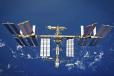
Understanding the full impact of radiation on astronauts
In space, without the protection of the magnetosphere, the type and dose of radiation is considerably different to what is naturally experienced on earth. However, it is the secondary particles of lower energies created when galactic and cosmic radiation interacts with shielding that is of concern for astronauts.