Graduate Profile - Robert Raposio
A desire to give people around the world greater access to the benefits of nuclear medicine is behind Robert Raposio and his research into producing radioisotopes in more efficient, cheaper and sustainable ways.


Showing 421 - 440 of 1705 results
A desire to give people around the world greater access to the benefits of nuclear medicine is behind Robert Raposio and his research into producing radioisotopes in more efficient, cheaper and sustainable ways.

The BRIGHT Project will expand the beamline infrastructure of the Australian Synchrotron to increase both its capacity and capabilities.

ANSTO as a leading science research organization in Australia is committed to the ethical, humane and responsible care of animals used for scientific purposes.

Defence requirements push your technology, we can help. ANSTO is home to some of Australia’s most important landmark research infrastructure – more than $1.3bn of it. Our unique capabilities are used by thousands of Australian researchers from industry and academia every year.
Since 1962, the United Uranium Scholarship has helped promising young scientists in the field of nuclear energy extend their knowledge and expertise. In 2022, scholarships were awarded to several ANSTO researchers, including Phil Sutton.

Combined users meeting highlights how ANSTO expertise and infrastructure can assist research community.
ANSTO’s National Deuteration Facility has provided deuterated cholesterol for international research to gain a better understanding of how the Spike protein of the COVID virus, SARS-Co-V-2, infects human cells through a membrane fusion mechanism.
ANSTO shared plans for an Innovation Precinct in southern Sydney at a breakfast event.


This program explores the mechanism and outcome of the interaction of radiation on biological systems in order to improve our understanding of the impact of radiation on the brain, optimise radiotherapy and develop mitigation strategies for space travellers.
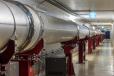
The Imaging and Medical beamline (IMBL) is a flagship beamline of the Australian Synchrotron built with considerable support from the NHMRC. It is one of only a few of its type, and delivers the world’s widest synchrotron x-ray ‘beam’.
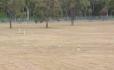
ANSTO is responsible for the Little Forest Legacy Site (LFLS) located within the ANSTO Buffer Zone boundary. This site, formerly known as the Little Forest Burial Ground (LFBG), was used by the Australian Atomic Energy Commission (AAEC) during the 1960’s to dispose of waste containing low levels of radioactivity and beryllium oxide (non-radioactive) in a series of shallow trenches. There has been regular monitoring of the site since 1966 and the results have been reported in ANSTO’s environmental monitoring reports.

ANSTO User Meeting 2021 - Speakers
Excellent radiolabelling facilities and the operation of OPAL, a world-class multi-purpose nuclear reactor, enable ANSTO to produce a large range of radioisotopes for Australian researchers in both radiopharmaceutical and environmental areas.

Ultra-flexible electronics has many potential applications within areas such as for example the military, healthcare and energy.
The Australian Synchrotron has played a crucial role in the discovery of a new cancer drug for the treatment of leukaemia.
Applications are now being accepted for the Industry foundations Scholarship.