Window into the cell
Access to a ‘window into the cell’ with University of Wollongong cryogenic electron microscope at ANSTO.


Showing 441 - 460 of 528 results
Access to a ‘window into the cell’ with University of Wollongong cryogenic electron microscope at ANSTO.
Research led by a group from the University of Newcastle has found a new way to make silcone surfaces – and have even discovered that they can control how slippery they are.
China’s vertical sandstone pillars studied using nuclear techniques

The User Advisory Committee (UAC) are pleased to present this year's invited speakers.
Stable, highly conductive 2D nanosheets of boron nitride promising new material.

Jake studied Mechatronic Engineering at UNSW, completing a thesis on the development of a stair climbing wheelchair.

A large international collaboration has developed a straightforward and cost-effective synthesizing approach using a 3D printing technique to produce single atom catalysts (SACs)—potentially paving the way for large scale commercial production with broad industrial applications.
A large international research team led by Academia Sinica in Taiwan investigated how heat is transferred in an advanced thermoelectric material made with germanium (Ge) and tellurium (Te) and doped with antimony (Sb). These devices are used to power space probes such as the Mars Curiosity Rover.

ANSTO has agreed to participate in an Australian trial of a review of research infrastructure access proposals in which applicants remain anonymous to aid the removal of structural barriers to the career progression of Women in STEM.
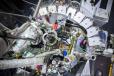
At ACNS we currently have 13 instruments in our user program, which use a variety of scattering techniques to probe materials over a range of length scales.

Julie Mulholland is a highly experienced science educator, having over 30 years of experience teaching science in NSW high schools, including 14 years as a Head Teacher Science.
Advanced imaging reveals unusual, unseen patterns in seabird feathers.
Radiation can be described as energy or particles from a source that travel through space or other mediums. Light, heat, and wireless communications are all forms of radiation.
A team of scientists from The Australian National University (ANU) has discovered how a powerful “weapon” used by many fungal pathogens enables them to cause disease in major food crops such as rice and corn