Nobel Prizes recognise insights at molecular and atomic scale
The Nobel Prizes for Physics, Chemistry and Medicine have been announced.


Showing 481 - 500 of 1414 results
The Nobel Prizes for Physics, Chemistry and Medicine have been announced.
Recognition of research that developed a life-saving pharmaceutical milkshake using synchrotron techniques.

Phoebe joined Taronga as part of the Wildlife Hospital team in 2012, where she developed a research interest in conservation forensics, leading an international project developing forensic tools to help save the world’s most hea
Winners of the Big Ideas Competition 2021
ANSTO radiocarbon facilities and scientists are featured in a new IMAX documentary film released in the United States.

Dr Karina Meredith was appointed Director of the new Research and Technology Group for Environment effective 15 January 2024.

ANSTO's OPAL reactor is one of the world's most advanced and reliable research reactors today. To ensure we can continue operating OPAL safely and reliably and maximise utilisation, ANSTO must regularly carry out maintenance and upgrades.
ANSTO-nandin hackathon teams have combined skills using science and business innovation in three successive events.



With a well-established portfolio of nuclear research and the operation of Australia's only nuclear reactor OPAL, ANSTO scientists conduct both fundamental and applied research on fuel for current, advanced, and future nuclear technology systems.

Research is being undertaken through an Australian Research Council Discovery Project "Reconstructing Australia’s fire history from cave stalagmites", led by Professor Andy Baker at UNSW Sydney and Dr. Pauline Treble at ANSTO. The project aims to calibrate the fire-speleothem relationship and develop coupled fire and climate records for the last millennium in southwest Australia.
There have been significant developments in small modular reactor technologies in 2022. The International Atomic Energy Agency expects small modular reactors (SMRs) to make an important contribution to achieving global climate goals and energy supply security. But with more than 70 SMR designs under development in 18 countries – including innovative reactors that are yet to be licensed and novel methods of modular manufacturing that are new to the nuclear industry – widely deploying SMRs in time remains a tall task.

Role at ANSTO

ANSTO is a unique national science organisation that began operating under its predecessor The Australian Atomic Energy Commission (AAEC) 70 years ago.
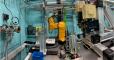
With enhanced submicron spatial resolution, speed and contrast, the Micro-Computed Tomography beamline opens a window on the micron-scale 3D structure of a wide range of samples relevant to many areas of science including life sciences, materials engineering, anthropology, palaeontology and geology. MCT will be able to undertake high-speed and high-throughput studies, as well as provide a range of phase-contrast imaging modalities.