Search hero banner

Search results

Showing 521 - 540 of 2005 results

ANSTO Opal

Accessing ANSTO’s Service Portal

ANSTO offers a broad range of programs and services to various industries and customers. Many of these services, including the Australian Nuclear Medicine Traceability program, are supported by online customer portals.

Glass

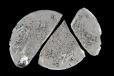
The impact of boron on glass surface properties

Within the bulk structure of such glasses, boron is known to be a key actor, as it exhibits intriguing and composition-dependent changes in coordination state that often drive properties.

Cryogenic Permanent Magnet Undulator (CPMU) source for the BRIGHT Nanoprobe beamline

Nanoprobe beamline (NANO) - under construction

The BRIGHT Nanoprobe beamline provides a unique facility capable of spectroscopic and full-field imaging. NANO will undertake high-resolution elemental mapping and ptychographic coherent diffraction imaging. Elemental mapping and XANES studies (after DCM upgrade) will be possible at sub-100 nm resolution, with structural features able to be studied down to 15 nm using ptychography.

Project BRIGHT

Project BRIGHT

The BRIGHT Project will expand the beamline infrastructure of the Australian Synchrotron to increase both its capacity and capabilities.

ANTARES microprobe

High-energy heavy ion microprobe

The high-energy heavy-ion microprobe is used for the characterisation or modification of material properties at depths from approximately 1 micrometre to maximum depths of up to 500 micrometres from the material surface. 

Australian Centre for Neutron Scattering

Australian Centre for Neutron Scattering

The Australian Centre for Neutron Scattering (ACNS) is a major research facility for neutron science that comprises a suite of neutron instruments with a range of techniques for scientific investigations in physics, chemistry, materials science, medicine and environmental science among other fields.

fingermark

Fingermark forensics

Most fingermark research has largely focussed on the organic material in residues. Consequently, a gap in fundamental knowledge exists when it comes to inorganic components such as metals.

Kookaburra

Local Environmental Monitoring

ANSTO is committed to monitoring its environmental performance and providing the community with accurate information about it. We also publish live meteorological data from our 49m Lucas Heights weather tower every 15 minutes.

Surfer Plot

Data Analysis

Below lists some useful programs for data reduction, search matching, analysis and structure visualisation of diffraction data.

Applied research minerals development

Research and development

Our research group carries out fundamental research uniquely applied to industrial problems in the areas of uranium, rare earth and lithium processing.

Diversity and inclusion at ANSTO

Diversity, Equity, Inclusion and Belonging

At ANSTO we understand that diverse teams produce better outcomes – and we value the merit that a diverse perspective can bring to the quality and outcomes of our work, and the way we get the job done.

Merit Access Terms and Conditions

Merit Access Terms and Conditions

By submitting a proposal for Merit Access to ANSTO’s Biosciences, Centre for Accelerator Science, Isotope Tracing, Nuclear Stewardship or the Vivarium capabilities, you are agreeing to the following Terms and Conditions. These Terms and Conditions apply to external merit researchers, scientific collaborators and partners unless there is a specific agreement in place between ANSTO and the home institution of the Principal Investigator.

Micro-Computed Tomography beamline (MCT)

Micro-Computed Tomography beamline (MCT)

With enhanced submicron spatial resolution, speed and contrast, the Micro-Computed Tomography beamline opens a window on the micron-scale 3D structure of a wide range of samples relevant to many areas of science including life sciences, materials engineering, anthropology, palaeontology and geology. MCT will be able to undertake high-speed and high-throughput studies, as well as provide a range of phase-contrast imaging modalities.

Pagination