Success in clinical trials
Shift in the treatment of blood cancers taking place.


Showing 541 - 560 of 857 results
Shift in the treatment of blood cancers taking place.
Specifications, User Manual, Instrument reference.


Role at ANSTO
Dr Richard Mole is an instrument scientist co-responsible for the cold-neutron time-of-flight spectrometer PELICAN.
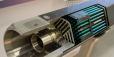
ANSTO researchers are undertaking the fabrication and characterising advanced fuels and investigating the key properties of nuclear waste and its long-term interaction with containment materials to improve safety for short and long-term storage.
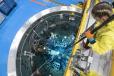

The Powder Diffraction beamline at the Australian Synchrotron is optimised for carrying out structural investigation under non ambient conditions and as a function of time.
New mentor program offers deep brains trust to support the development of southern Sydney startups
Earlier this month, ANSTO welcomed a delegation of Elders from the Willandra Lakes Region World Heritage site to its Lucas Heights campus. The visit marked a significant collaboration between Traditional Custodians and scientists working to uncover the environmental history of Lake Mungo.
Powerful combination of deuteration and neutron scattering used to characterise structure of molecules on surface of nanoparticles.

An initiative for National Science Week 2024 the Shorebirds Competition addresses the 2024 theme for National Science Week, ‘Species Survival’ and provides unique cross-curricula learning for Australian primary students in Years 3 to 6.
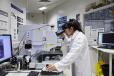
The Infrared Microspectroscopy beamline combines the high brilliance and collimation of the synchrotron beam through a Bruker V80v Fourier Transform Infrared (FTIR) spectrometer and into a Hyperion 3000 IR microscope to reach high signal-to-noise ratios at diffraction limited spatial resolutions between 3-8 μm.
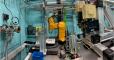
With enhanced submicron spatial resolution, speed and contrast, the Micro-Computed Tomography beamline opens a window on the micron-scale 3D structure of a wide range of samples relevant to many areas of science including life sciences, materials engineering, anthropology, palaeontology and geology. MCT will be able to undertake high-speed and high-throughput studies, as well as provide a range of phase-contrast imaging modalities.

Do you love science? Here is a competition for you that combines chemistry and creativity! Discover the world of elements and create a poster for your favourite element!

The Advanced Diffraction and Scattering beamlines (ADS-1 and ADS-2) are two independently operating, experimentally flexible beamlines that will use high-energy X-ray diffraction and imaging to characterise the structures of new materials and minerals.