Seafood authenticity research moves into new stage
Accurate ‘fingerprinting’ tool to verify source of origin is in development with collaborators from academia and industry.


Showing 561 - 580 of 618 results
Accurate ‘fingerprinting’ tool to verify source of origin is in development with collaborators from academia and industry.
Nuclear techniques used in investigation of a new class of micro and nanoscale zinc fertilisers.
From June to August we invited primary schools in Greater Sydney/Illawarra and Melbourne to participate in our 2019 Shorebirds Competition. Students in Years 3 to 6 were asked to create a public awareness poster for a threatened shorebird found in Australia.
Improving aquaculture for food production in Papua New Guinea
Detailed molecular structure of silver nanocrystals determined
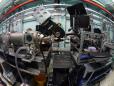
Technical information on the SAXS / WAXS beamline at the Australian Synchrotron.

In Australia and the Southeast Asia basin, the ANSTO facility offers a wide range of unique nuclear-beam techniques for cultural heritage research.
New high energy ion microprobe beamline supports space research on the effects of radiation on astronauts.

ANSTO offers a broad range of programs and services to various industries and customers. Many of these services, including the Australian Nuclear Medicine Traceability program, are supported by online customer portals.
ANSTO has put together a robust multidisciplinary approach to understanding the impacts of nanomaterials, investigating a common food additive, E171 titanium dioxide, used primarily as a colouring agent in everyday foods.
ANSTO contributes to major study on global warming by measuring methane and carbon monoxide trapped in ice.

ANSTO researchers are investigating nuclear propulsion systems for applications on the sea and in space.

ANSTO Synroc technology provides a safe, secure matrix for the immobilisation and final disposal of radioactive waste.
ANSTO announces the recipients of the 2022 organisational awards