International collaboration on advanced manufacturing
Highly accurate non-invasive nuclear technique helps validate theoretical model for optimised laser material deposition in additive manufacturing.


Showing 61 - 80 of 102 results
Highly accurate non-invasive nuclear technique helps validate theoretical model for optimised laser material deposition in additive manufacturing.
ANSTO offers a diverse range of career opportunities within science, engineering, corporate services and trade disciplines.
Study helps make carbon dating a more accurate chronological tool.
Retrieving an Antarctic ice core more than a million years old presents challenges and opportunities.

ANSTO has been tracking and publishing data on fine particle pollution from key sites around Australia, and internationally, for more than 20 years.
The Australian Academy of Technology and Engineering (ATSE) has elected Professor Andrew Peele, Director of ANSTO’s Australian Synchrotron, to become a Fellow of the prestigious organisation.
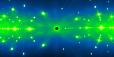
Sample environments, Data analysis and reduction on the Koala instrument.
Nominations are being accepted for the 2017 Stephen Wilkins medal for an outstanding thesis.
Imperial College London researchers tapped into ancient geological data locked within precariously balanced rocks using a new technique to boost the precision of hazard estimates for large earthquakes.
Radiocarbon dating capabilities at the Centre for Accelerator Science have provided evidence of a 17,300-year old painting of a kangaroo from the Kimberley region.
Young physicist in training to become a surrogate inspector for Comprehensive Nuclear Test Ban Treaty Organisation.
Radiocarbon study provides insight into soil carbon dynamics and effects of agriculture.
Atmosphere scientists find link between indigenous weather knowledge and Sydney air pollution.
Dr Rezwanul Haque, now a senior lecturer at the University of the Sunshine Coast, received a national Young Scientist Award for his earlier research using nuclear techniques at ANSTO’s Australian Centre for Neutron Scattering to find cracks and signs of stress in riveted joints in sheet metal in car bodies.
Research has revealed the Lapita cultural group interacted with the indigenous people of Papua New Guinea more than 3,000 years ago and set the stage for the peopling of the Pacific