Publications
Publications and resources from the Powder Diffraction beamline.


Showing 61 - 80 of 223 results
Publications and resources from the Powder Diffraction beamline.
An ANSTO radiochemist has been awarded a scholarship to carry out research at the world-renowned Sloan Kettering Cancer Center in New York.
ANSTO seeks candidates who are passionate about making a contribution to Australian society through supporting nuclear science and technology.
ANSTO and the Australian Radiation Protection and Nuclear Safety Agency (ARPANSA) have been recognised for their valuable contributions to the search and recovery efforts for a missing 8mm-long radioactive capsule in the Western Australian outback.
After careful selection, three Australian science teachers are set to fly to Geneva today after winning positions on the International High School Teacher Programme at CERN.
ANSTO has contributed to the internationally-distributed handbook on plutonium published by the American Nuclear Society.
Stephen received his PhD (Physical Chemistry) from Griffith University in 1996.
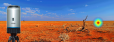
A tiny 8mm by 6mm radioactive capsule went missing in January 2023, somewhere along a 1400 kilometre journey from Rio Tinto’s Gudai-Darri iron ore mine to its final destination in Perth, Western Australia. Find out how ANSTO's CORIS360® technology identified the exact location of the missing source.
ANSTO physicist will gain further experience in particle therapy technologies.
Collaboration investigates a promising new nanoparticle for potential use in combination with other therapies for brain cancer
The NSW Government will invest $12.5 million to support the expansion of the Innovation Precinct at the Lucas Heights campus of the Australian Nuclear Science and Technology Organisation (ANSTO).
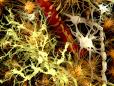
This program uses ANSTO’s nuclear capabilities to identify, quantify, and monitor the mechanisms which cause, or influence the development and progression of chronic diseases.
Swinburne University of Technology is launching an Australian-first Aerostructures Innovation Research Hub (AIR Hub) with the support of $12 million in funding from the Victorian Government.