Macromolecular crystallography continues to help elucidate complex protein structures
International collaboration uses cryo-electron tomography to determine the structure of a complex responsible for sorting and delivering cellular cargo.


Showing 701 - 720 of 1644 results
International collaboration uses cryo-electron tomography to determine the structure of a complex responsible for sorting and delivering cellular cargo.

Welcome to the home of Planetary Materials research at ANSTO.
Latest information on the scheduled supply of our nuclear medicine production.
The Centre for Accelerator Science provides complementary capabilities to Synchrotron-based and the neutron-based research with the operation of four accelerators, associated beamlines, clean laboratories and in-house expertise in ion beam analysis (IBA) and accelerator mass spectrometry (AMS).
Research infrastructure will support research and development of advanced concrete.
Million year lag time in transport of sediment in Murray Darling River Basin system.
Australia and Sri Lanks signs new partnership to fight chronic kidney disease.
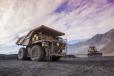
For over 45 years, ANSTO has provided consultancy and process development services to the mining and minerals processing industries in Australia and globally.

The design and implementation of alternative energy sources is one of the greatest scientific and social challenges of our time.
ANSTO’s Lucas Heights campus has an extensive range of specialised facilities and capabilities that are available to assist industry-based professionals in solving problems. Please contact us to discuss how we can assist you. We are open to entering into commercial arrangement with appropriate partners.
Two startups supported by the nandin Innovation Centre at ANSTO have hit the ground running in 2021 securing major opportunities from state governments to see their businesses thrive.
An international team led by scientists at City University of Hong Kong has found flexible metal-organic framework (MOF) with one-dimensional channels that acts as a “molecular trapdoor” to selectively adsorb gases, such as carbon dioxide, in response to temperature and pressure changes.
Australia launched a new international development project in partnership with the International Atomic Energy Agency (IAEA) to advance ‘Rays of Hope’ in the Asia and Pacific region.

ANSTO Head of Research Dr Suzanne Hollins has been appointed to chair IAEA group on nuclear applications.