Aimed at the delegated Radiation Safety Officer responsible for a range of radioactive substances, radiation apparatus and/or ionising radiation services across a variety of facilities or industries
Sydney


Showing 721 - 740 of 2005 results
A team of researchers from ANSTO and University of Technology Sydney have set a record by conducting thin film experiments at 1100 degrees C.
The instrument is very well suited for the study of kinetic effects, like relaxation following a chemical reaction, or external impulses like mechanical deformation, an electric or magnetic field.
The Australian Government recently signed a landmark emissions reduction technology deal with Great Britain, which includes nuclear energy and clean hydrogen among the six key low emission technologies the two countries hope to advance.

ANSTO has a variety of games and apps to educate students on how radiation works, nuclear medicine, the periodic table, and atom building.
Researchers and industry partners from UNSW Australia, the Australian Centre for Nanomedicine, Children’s Cancer Institute and Inventia Life Sciences Pty Ltd have been awarded the 2021 ANSTO Eureka Prize for Innovative Use of Technology for their method to rapidly-produce 3D cell structures
Rutherford backscattering primarily provides information about the concentration of elements VS depth in a light material.
Information has been provided to assist with the preparation of experiment proposals and beamtime.
The nature of Metal-Oxide-Semiconductor Field Effect Transistors (MOSFETs) present a fascinating paradox in space exploration. Their strength in radiation detection becomes their weakness in space operations, exposing an Achilles' heel for NASA. Yet, these same devices monitor radiation doses received by humans on earth and in space.
Small modular reactors can be built using Generation IV reactor technologies, that old the promise of considerably higher efficiency for decarbonised energy production and industrial heat co-generation.

Our temperature sample environments include closed cycle refrigerators, cryofurnaces, cryostates, furnaces, rapid thermal devices, temperature baths and low temperature inserts.

Research to detect and measure air pollution, the composition the atmosphere and mixing in the atmosphere.
Australia’s best known carnivorous dinosaur Australovenator is under the microscope at ANSTO

New energy technologies, including hydrogen production, are being investigated to achieve decarbonisation.
ANSTO provides secondary students with a range of learning resources for those interested in science or studying for exams. For teachers, ANSTO provides learning resources and professional development, as well as in-school-term science tours and videoconferences. Workbooks are provided as required learning material to accompany a school visit to ANSTO. They can also be used on their own as a classroom resource.

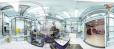
Technical information for the Powder Diffraction beamline at the Australian Synchrotron.
ANSTO is taking its innovative ANSTO Synroc® and CORIS360® technologies to the world stage at the Waste Management Symposia 2024 in Phoenix, Arizona USA this week (10 – 14 March 2024). Joining over 45 other countries and around 3,000 attendees, an Australian Government contingent comprising of ANSTO and the Australian Radioactive Waste Agency is in attendance to showcase Australia’s extensive radioactive waste management capabilities.