Supply of nuclear medicine in the news
Lutetium-177 used for advanced prostate cancer


Showing 761 - 780 of 1113 results
Lutetium-177 used for advanced prostate cancer
Two startups supported by the nandin Innovation Centre at ANSTO have hit the ground running in 2021 securing major opportunities from state governments to see their businesses thrive.
ANSTO is proud to announce that a license has been issued by the Therapeutic Goods Administration to produce Lutetium-177 (Lu-177) for use in clinical trials.
Dr Inna Karatchevtseva, who collaborates with DMTC, was among those identified by The Australian in its Research magazine as a national leader in her field of ceramic engineering
ANSTO has contributed to research on a novel therapeutic option for combatting antimicrobial-resistant Gram-negative bacteria, known as superbugs.
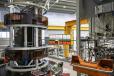
This state-of-the-art metastable-exchange optical-pumping helium-3 polarising system enables polarisation-analysis experiments on five of our existing instruments.
ANSTO has put together a robust multidisciplinary approach to understanding the impacts of nanomaterials, investigating a common food additive, E171 titanium dioxide, used primarily as a colouring agent in everyday foods.
Australia’s new state-of-the-art nuclear medicine facility gets green light.

International collaboration uses Australian Synchrotron on pioneering malaria research.
Dr Jessica Hamilton, a beamline scientist at the Australian Synchrotron, has won the Falling Walls Lab competition hosted by the Australian Academy of Science for her 3 minute presentation on a novel approach to using mining waste for carbon dioxide capture and a source of carbonate minerals. The event is held to deliver solutions to some of the most promising challenges of our time.
ANSTO participation in ARC on Intelligent Robotic Systems for Real-time Asset Management has potential benefit in the management of infrastructure and assets
A team of researchers including the University of Rochester, CSIRO and ANSTO has found methane emissions from human fossil sources have been greatly underestimated.
$80.2 million in new funding to expand the research capabilities of the Australian Synchrotron.

Publications, posters and conference presentations for fire impacts reconstructed from a southwest Australian stalagmite.
The Australian led regional cancer care project in medical physics held its first regional training course in Malaysia to progress Rays of Hope.

Think Science! 2023 Summary and Results