
Highlights - Aerosol Sampling
ANSTO has been tracking and publishing data on fine particle pollution from key sites around Australia, and internationally, for more than 20 years.


Showing 81 - 100 of 115 results
ANSTO has been tracking and publishing data on fine particle pollution from key sites around Australia, and internationally, for more than 20 years.
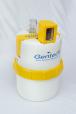
ANSTO’s nuclear medicine processing and distribution facility assembles, loads, tests and distributes a range of nuclear medicine products, including Mo-99. The Mo-99 is dispensed into an ANSTO radiopharmaceutical Gentech® Generator where it decays to Tc-99m.

ANSTO's OPAL reactor is one of the world's most advanced and reliable research reactors today. To ensure we can continue operating OPAL safely and reliably and maximise utilisation, ANSTO must regularly carry out maintenance and upgrades.
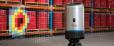
Overlaying a 360° x 90° radiation image onto a panoramic optical image of the scene, makes interpretation much easier. The spectroscopic detector at the heart of the imager enables the accurate visualisation and identification of sources across a broad energy range.

ANSTO has a full suite of mineralogical, chemical and hydrometallurgical facilities from laboratory through to pilot scale.

ANSTO Synroc technology provides a safe, secure matrix for the immobilisation and final disposal of radioactive waste.

Radioisotopes are widely used in medicine, industry, and scientific research. New applications for radioisotopes are constantly being developed.
Using the past to illuminate the future: Brothers collaborate on important science documentary for ABC TV

The Advanced Diffraction and Scattering beamlines (ADS-1 and ADS-2) are two independently operating, experimentally flexible beamlines that will use high-energy X-ray diffraction and imaging to characterise the structures of new materials and minerals.

ANSTO is proud to host the Shorebirds Competition for the fourth year. This unique environmental poster competition is free to enter and offers over $4000 in prizes (insert link to prizes button) for students and schools!
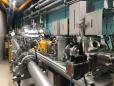
The Medium Energy- X-ray Absorption Spectroscopy beamlines provides access to XANES and EXAFS data from a bending magnet source, optimised for cutting-edge applications in biological, agricultural and environmental science in an energy range that is not currently available at the Australia Synchrotron.

The Detection & Imaging group builds on ANSTO’s 70-year history of scientific achievements and contributions in meeting the nuclear needs of industry, globally.

Australia’s Open Pool Australian Lightwater (OPAL) reactor is a state-of-the-art 20 megawatt multi-purpose reactor that uses low enriched uranium (LEU) fuel to achieve a range of activities to benefit human health, enable research to support a more sustainable environment and provide innovative solutions for industry.

ANSTO’s user office in Melbourne offers access to the Australian Synchrotron, a world-class research facility with over 4,000 user visits per year. ANSTO seeks collaboration and partnerships with research organisations, scientific users and commercial users.
ANSTO commenced an aerosol sampling program thirty years ago this week to characterise these pollutants and ultimately, identify their sources, which has taken it to the forefront of environmental monitoring of this type in Australia and the region.
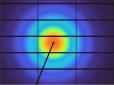
The Biological Small Angle X-ray Scattering beamline will be optimised for measuring small angle scattering of surfactants, nanoparticles, polymers, lipids, proteins and other biological macromolecules in solution. BioSAXS combines combine a state-of-the-art high-flux small angle scattering beamline with specialised in-line protein purification and preparation techniques for high-throughput protein analysis.
Five exceptional female science communicators are part of a larger team who use skills in education and engagement to promote an interest in science amongst the public and students.