Beamtime Guide - XFM
Beamtime Guide on the X-ray Fluorescence Microscopy beamline at the Australian Synchrotron.


Showing 81 - 100 of 113 results
Beamtime Guide on the X-ray Fluorescence Microscopy beamline at the Australian Synchrotron.
Australia part of global renaissance in fusion power research symbolised by ITER experiment


Researchers from ANSTO and NASA’s Jet Propulsion Laboratory have uncovered the likely mineral composition of Saturn’s largest moon, Titan, revealing a world of exotic organic crystals unlike any found on Earth.

Detailed data on ANSTO electricity use and CO2 emissions for FY2024 - FY2025

Dr Joseph Bevitt is a senior instrument scientist on the Dingo radiograph/tomography/imaging station, and scientific coordinator for the Australian Centre for Neutron Scattering.

3D models of multilayered structures on engineering scale from nanoscale damage profiles.
Primary students across Australia were invited to create a public awareness poster for a threatened shorebird found in Australia for our 2020 Shorebirds Competition. In response to COVID-19, and the changes to children’s learning environments, we opened the competition early and also included categories for individual children to enter, as well as school children.
The high-energy heavy-ion microprobe is used for the characterisation or modification of material properties at depths from approximately 1 micrometre to maximum depths of up to 500 micrometres from the material surface.

Role at ANSTO
Guide to successful proposals and experiments at the Powder Diffraction beamline.
The Biological Small Angle X-ray Scattering beamline will be optimised for measuring small angle scattering of surfactants, nanoparticles, polymers, lipids, proteins and other biological macromolecules in solution. BioSAXS combines combine a state-of-the-art high-flux small angle scattering beamline with specialised in-line protein purification and preparation techniques for high-throughput protein analysis.
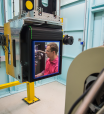
The High Performance Macromolecular Crystallography beamline will enable the study of very small (sub-5 micrometre) or weakly diffracting crystals, providing a state-of-the-art high-throughput facility for researchers. MX3 will be able to study the structures of large proteins and protein complexes for virology, drug design and industrial applications via goniometer mounted crystals, in-tray screening, or via serial crystallography methods.

The User Advisory Committee (UAC) are pleased to present this year's invited speakers.
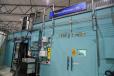
Publications and resources from the Powder Diffraction beamline.