

Showing 81 - 100 of 250 results
Progress on organic thin films for solar cells
Modifications to promising novel non-fullerene small molecule acceptor in organic thin film for solar cells demonstrates improved power conversion efficiency.
Going global with nuclear medicine
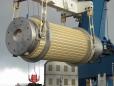
Nuclear Waste Solutions
Combining scientific expertise with more than $1.3 billion in unique operational assets to provide optimal radioactive waste solutions.
Interactions of nanoplastics
Exploring the interaction of polystyrene nanoplastics and blood plasma proteins.
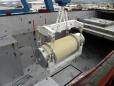
Services
ANSTO waste management services meet regulatory requirements and international best practice standards.

Environmental Protection
ANSTO is committed to minimising the environmental impact of its activities and to implementing strategies which have a positive effect on the environment. The ANSTO Work Health Safety and Executive Committee oversees this process.
Radiocarbon dating and stable isotope analysis contribute to Antarctic research
Study shows for the first time that vegetation in the Windmill Islands, East Antarctica is changing rapidly in response to a drying climate.

Statement of Expectations
On the 10th of October 2025, the Minister for Industry, Science and Technology provided his Statement of Expectations to ANSTO.
High performance training and sports science centre
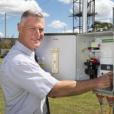
Distinguished Research Scientist
Role at ANSTO
Australian Synchrotron supports research to advance a new generation of mRNA vaccines using patches
A research team from RMIT University in Melbourne and MIT in the US has taken an important step towards making mRNA vaccines easier to distribute, store and administer as patches. They used the Small-Angle and Wide-Angle X-ray Scattering (SAXS/WAXS) beamlines at the Australian Synchrotron, to reveal critical insights into the behaviour of vaccine nanoparticles during drying and rehydration.

Highlights - Aerosol Sampling
ANSTO has been tracking and publishing data on fine particle pollution from key sites around Australia, and internationally, for more than 20 years.
Fine tuning materials for energy storage using architectural design and structural engineering
Energy researchers from UNSW have reported progress using controlled architectural design and structural engineering as a method to fine-tune materials to have simultaneous high power and high energy density for the electrochemical storage in portable devices.

Nanoprobe beamline (NANO) - under construction
The BRIGHT Nanoprobe beamline provides a unique facility capable of spectroscopic and full-field imaging. NANO will undertake high-resolution elemental mapping and ptychographic coherent diffraction imaging. Elemental mapping and XANES studies (after DCM upgrade) will be possible at sub-100 nm resolution, with structural features able to be studied down to 15 nm using ptychography.
Research captures dynamic atomic interactions in a promising sodium ion battery material
Investigators from UNSW and ANSTO have provided insights into the dynamic interactions of atoms in a promising material for sodium-ion batteries.
ANSTO congratulates the 2025 Nobel Prize in Chemistry recipients
Researchers use ANSTO's Australian Synchrotron to clarify immune response mechanism
Experiments undertaken at the Australian Synchrotron have allowed research teams from Monash University and La Trobe University to clarify fundamental aspects of T-cell activation crucial to the body’s immune response to disease.
Nuclear tech helps power Perseverance Rover on Mars
A large international research team led by Academia Sinica in Taiwan investigated how heat is transferred in an advanced thermoelectric material made with germanium (Ge) and tellurium (Te) and doped with antimony (Sb). These devices are used to power space probes such as the Mars Curiosity Rover.