


Showing 81 - 100 of 151 results

New User Symposium 2025 Program
Timetable and Teams links

ANSTO'S National Science Week Hackathon 2024
Decommissioning

User Meeting 2024 - Awards & Prizes
You are invited to submit to the various awards from ANSTO and the User Meeting 2024 organising committee.

Accelerator Physicist
Role at ANSTO

Sydney Access Proposals
View the upcoming proposal deadlines for access to ANSTO’s Research Portal. The User Office provides support for research proposals and enables you to leverage our world-class research infrastructure and facilities.
Big Ideas
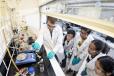
ANSTO Big Ideas encourages students to creatively communicate the work of an Australian scientist, and explain how their work has inspired them to come up with a Big Idea to make our world a better place. This competition is intended to engage and support Australian students in years 7-10 in Science and encourage them to pursue studies and careers in STEM.

Manager, Accelerator Physics
Role at ANSTO

PhD Scholarship - Innovation, Design and Technology
Three-year full-time PhD program is in partnership between the nandin Innovation Centre (ANSTO) and Design Factory Melbourne (Swinburne University). The PhD is based at ANSTO, Lucas Heights, Sydney, NSW.

New Hope for Malaria Treatment: Hijacking the Parasite’s Protein Factory

Think Science! Competition 2026
The Think Science! competition encourages students in Years 3-10 to learn science inquiry skills in a fun and accessible way! Entry is FREE and there are generous prizes for winning schools. Any topic can be chosen, and special materials are not required.
Medium Energy X-ray Absorption Spectroscopy Beamline (MEX-1 and MEX-2)
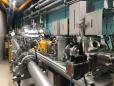
The Medium Energy- X-ray Absorption Spectroscopy beamlines provides access to XANES and EXAFS data from a bending magnet source, optimised for cutting-edge applications in biological, agricultural and environmental science in an energy range that is not currently available at the Australia Synchrotron.

Deaf Youth Science Camp
The 2025 Deaf Youth Science Camp is a chance for Deaf/hard-of-hearing young people (aged 12-17 years old) to participate in an immersive science experience. At the camp, participants will do hands-on science activities, go on tours of different science facilities, and meet Deaf STEM professionals. The camp is also an opportunity to develop personal and leadership skills as well as enhance friendship networks.

Organic Synthetic Chemist, National Deuteration Facility
Role at ANSTO

AANSS 2026 - Prizes & Awards
You are invited to submit to the various awards
Micro-Computed Tomography beamline (MCT)
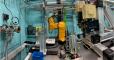
With enhanced submicron spatial resolution, speed and contrast, the Micro-Computed Tomography beamline opens a window on the micron-scale 3D structure of a wide range of samples relevant to many areas of science including life sciences, materials engineering, anthropology, palaeontology and geology. MCT will be able to undertake high-speed and high-throughput studies, as well as provide a range of phase-contrast imaging modalities.

Radiochemist
Role at ANSTO

Anonymised Review
ANSTO has agreed to participate in an Australian trial of a review of research infrastructure access proposals in which applicants remain anonymous to aid the removal of structural barriers to the career progression of Women in STEM.

Radiotracer Methods and Organic Chemistry Task Leader