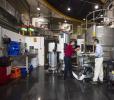
Working at ANSTO
ANSTO offers a diverse range of career opportunities within science, engineering, corporate services and trade disciplines.


Showing 81 - 100 of 104 results
ANSTO offers a diverse range of career opportunities within science, engineering, corporate services and trade disciplines.

The BRIGHT Project will expand the beamline infrastructure of the Australian Synchrotron to increase both its capacity and capabilities.
ANSTO scientist, Dr Klaus Wilcken of the Centre for Accelerator Science, used cosmogenic nuclide dating to determine the ages of layered sand and gravel samples, in which seven footprints of the flightless bird, the moa, were found on the South Island in New Zealand in 2019.
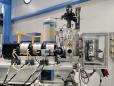
The high-energy heavy-ion microprobe is used for the characterisation or modification of material properties at depths from approximately 1 micrometre to maximum depths of up to 500 micrometres from the material surface.

Phase contrast tomography shows great promise in early stages of study and is expected to be tested on first patients by 2020.
A new nuclear medicine waste processing facility that showcases ANSTO Synroc technology is under construction.
On average, there is now 17 per cent less rainfall across Western Australia’s south-western region than was recorded prior to 1970. This rainfall reduction has economic, social and environmental implications for the region, in particular for the growing capital of Perth, as well as water-dependent industries in the state.
An international team of academic researchers led by Curtin University have provided a description of a new species of pterosaur, a flying reptile.
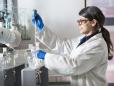
The ANSTO Year In Industry Internship Program is for penultimate year students studying towards relevant scientific and/or engineering degrees.

Terry has studied in Singapore and Australia, focusing on teaching design. He is passionate about cross-cultural interactive learning and design research to inspire new and innovative concepts.
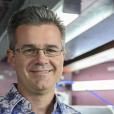
Dr Joseph Bevitt is a senior instrument scientist on the Dingo radiograph/tomography/imaging station, and scientific coordinator for the Australian Centre for Neutron Scattering.
The most important data from NASA’s first crewed Artemis mission may not be its photographs, but the radiation measurements that will shape how humans work and survive beyond travel farther from Earth’s magnetic shelter safely.
Neutron and gamma ghost imaging are important scientific developments reported in two publications, and the subject of an Australian Research Council Discovery Project grant awarded to a team that includes ANSTO scientists

Shaun Jenkinson is currently Chief Executive Officer of ANSTO.
ANSTO's Chief Nuclear Officer shares insights on the safe management of Australia's nuclear waste.